
Kosky's Colorful Siegried
Barrie Kosky is a lucid, lively, and often surprising stage director. His main strength lies in a visual culture he has honed, above all, in film, which allows him to create visually powerful, sometimes brilliant, and often surprising and highly engaging productions.
But, like all stage directors, when he encounters Wagner, he truly stumbles. Because when you dare to stage and alter what Wagner conceived in his Gesamtkunstwerk—a magnum opus that no one has ever surpassed—if you don't possess Wagner's equal or greater talent, you can't even begin to understand what he created.
As with everyone—Bieito, Kosky, Schwartz, Kratzer, and so on—everything falls apart when Wagner's creations become too complex. We already saw with the prelude, Rheingold, and the first act, Die Walküre, that Kosky's approach didn't work. Now, with Siegfried, we continue down the same path, and although Kosky creates some visually powerful moments linked to cinematic culture, the result completely departs from the Wagnerian concept and achieves nothing more than a crude caricature that only serves to confuse the audience. The audience understands absolutely nothing of what is happening on stage, to the point that in London people began to laugh during the dialogues between Mime and Siegfried. These dialogues are utterly unfunny because anyone who understands and has read the Wagnerian text—something I believe many directors today don't even bother to do—knows that these dialogues embody Siegfried's great inner drama and, simultaneously, the great drama that will lead to the fall of the gods.
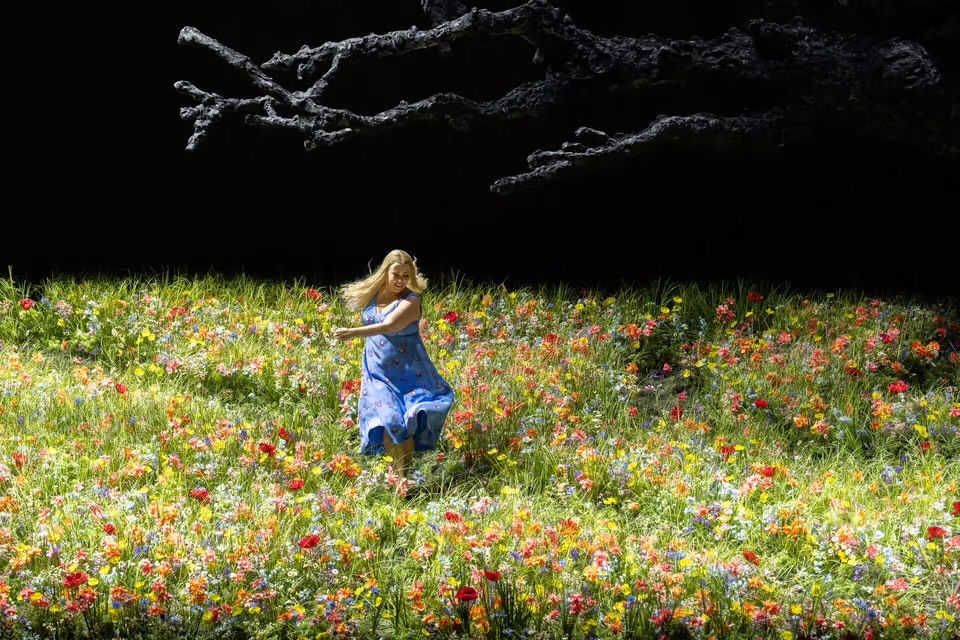
We begin with Mime living high up in the trees like a troll or one of the Ewoks from Star Wars, excessively caricatured, banging his head like a fool, with a backpacking Siegfried. I've lost count of how many times Andreas Schager has appeared in all sorts of productions with a backpack. It always seems to be the same backpack. From this, we move to a second act that takes us to winter and the Yeti, a Yeti drawn from countless cinematic references, but above all, from the world of fashion. The Mosquito Man who appeared at the closing ceremony of the 2024 Paris Olympics, or perhaps copied from an old image on a David Bowie album cover. But the most difficult part of this production to understand is the third act. As always happens, all directors who want to break the mold to be innovative completely flounder with Wagner. And the third act, where there is neither fire nor Brünnhilde sleeping on a rock, but rather we find ourselves in the alpine meadows of Heidi and Marco, there everything collapses in an absolutely disastrous way.
Why? If someone had read the final line sung by Siegfried and Brünnhilde—"Leuchtender Liebe, lachender Tod"—they would have understood that they are speaking of death for love, like Isolde, and that it has nothing to do with an alpine meadow full of flowers, but rather with a fatal destiny.
Leaving the production aside, the big question of the evening was the Siegfried of our time, Andreas Schager, who is on a European tour that began with Thielemann in Berlin, continued with the disaster of Bieito and Heras Casado in Paris, and is now followed by this somewhat interesting innovation by Kosky in London. Schager's voice is like a whirlwind of force, often uncontrolled, as was the case yesterday; Often lacking in legato and more romantic phrasing, but he is Schager nonetheless, and we love him just as he is: with his power, his metallic stridency, his tireless voice. And yesterday he was extraordinary. But the big problem was that Pappano is no Thielemann, and Pappano couldn't control an orchestra that was sometimes a bit sluggish, often lacking sufficient brilliance, lacking the necessary force to keep pace with Schager, which created some dissonant moments, both harmonically and dramatically. The orchestra couldn't reach the same sonic power as Schager, and so Schager seemed to be singing without an orchestra.
Mime, sung by Peter Hoare, was truly extraordinary. He's not one of the best, but he has a very powerful voice, perhaps a bit too comical, but he created a Mime that we can remember for a long time. His brother Alberich, sung by Christopher Purves, was surely one of the best voices of the evening, powerful and very Wagnerian.
Elisabet Strid's portrayal of Brünnhilde is exquisitely beautiful, possessing extraordinary power, which she controls in the high notes, which are powerful and can soar above the orchestra. She is a great Brünnhilde, though not one of the best, because she lacks power in the lower register, the vocal fullness of some of the great Brünnhildes, but nonetheless, her musicality and dramatic flair are undeniable. Her beautiful voice and artistry are extraordinary, and her Brünnhilde is unique.
Soloman Howard's Fafner was also of a very high standard, although I think we should put an end to those Fafners with modified microphones. Sarah Dufresne's Woodbird was equally impressive, with a remarkable vocal level and beautiful timbre.
Wiebke Lehmkuhl's Erda was romantic and powerful, imbuing this crucial role with eloquent force. Tommi Hakala replaced Christopher Maltman, who was ill, and delivered an extraordinary Wotan that, in his voice, is truly unique. He can still work on the role and give it more power, but his performance yesterday was very good.
Pappano's conducting wasn't always up to par with the score. It was Wagnerian, it was energetic, but it lacked pulse at many moments and, at others, such as at the end of the third act, after the final phrase of Siegfried and Brünnhilde, it seemed that they were in a hurry to finish, because the last bars were an absolutely unseemly uproar for the London coliseum.
Dr. Eloi de Tera



Barrie Kosky es un director de escena lúcido, vivaz y muchas veces sorprendente. Su fuerza principal está enraizada en una cultura visual que él ha fortalecido, sobre todo, en el cine y que le permite crear puestas en escena visualmente muy potentes, a veces brillantes y muchas otras veces sorprendentes y muy atractivas.
Pero, como todos los directores de escena, cuando tropieza con Wagner, tropieza de verdad. Porque cuando te atreves a poner en escena y cambiar lo que Wagner concibió en su Gesamtkunstwerk -una obra magna que nadie ha conseguido nunca superar- si no tienes el mismo talento que Wagner o superior, no puedes llegar ni tan solo a entender lo que él creó.
Así como sucede con todos —Bieito, Kosky, Schwartz, Kratzer, etcétera—, todo se diluye cuando las cosas que Wagner creó se complican. Ya vimos anteriormente con el preludio, Rheingold y la primera jornada, Die Walküre que Kosky no funcionaba. Ahora, con Siegfried, seguimos en la misma línea y, aunque Kosky crea algunos momentos visualmente muy potentes que están vinculados a la cultura cinematográfica, el resultado se aleja completamente del concepto wagneriano y no consigue nada más que ser una burda caricatura que lo único que hace es crear en el público confusión, ya que el público no entiende absolutamente nada de lo que sucede en escena, hasta el punto de que en Londres la gente empezaba a reír durante los diálogos entre Mime y Siegfried. Diálogos que no tienen ninguna gracia porque quien entiende y ha leído el texto wagneriano —cosa que creo que muchos directores de hoy ni tan solo se permiten hacer— sabe que esos diálogos entrañan el gran drama interno de Siegfried y, a la vez, el gran drama que llevará a la caída de los dioses.
Empezamos con un Mime viviendo encima de los árboles como si fuera un troll o como si fuera uno de los ewoks del bosque de Star Wars, excesivamente caricaturizado, golpeándose en la cabeza como un tonto, con un Siegfried mochilero. Ya no sé cuántas veces ha aparecido en producciones de todo tipo el señor Andreas Schager con una mochila en la espalda. Parece que siempre es la misma mochila. Pasamos de esto a un segundo acto en el que nos trasladamos al invierno y al hombre de las nieves, un hombre de las nieves sacado de tantísimas referencias cinematográficas, pero sobre todo de referencias del mundo de la moda. El hombre mosquito que apareció en la ceremonia final de los Juegos Olímpicos de París de 2024 o quizá copiado de una imagen antigua de un álbum de David Bowie. Pero en esa producción lo más difícil de entender es el tercer acto. Como siempre pasa, todos los directores que quieren romper moldes para ser innovadores, con Wagner naufragan completamente. Y el tercer acto, donde no hay ni fuego, ni Brünnhilde está durmiendo encima de una roca, sino que nos encontramos con los prados alpinos de Heidi y Marco, allí sucumbe todo de una forma absolutamente desastrosa.
¿Por qué? Si alguien hubiera leído la frase final que cantan Siegfried y Brünnhilde -Leuchtender Liebe, lachender Tod- habría entendido que hablan de muerte por amor, como Isolde, y que nada tiene que ver con un prado alpino lleno de flores, sino más bien con un destino fatal.
Dejando la producción aparte, la gran cuestión de la noche era el Siegfried de nuestros días, Andreas Schager, que está haciendo un tour europeo que empezó con Thielemann en Berlín, continuó con el desastre de Bieito y Heras Casado en París y sigue con esta innovación algo interesante de Kosky en Londres. La voz de Schager es como un torbellino de fuerza, muchas veces sin control, como es el caso de ayer; muchas veces falta de un legato y un fraseo más romántico, pero de todos modos es Schager y lo amamos así como es: con su fuerza, con su estridencia metálica, con su voz incansable. Y ayer estuvo extraordinario. Pero el gran problema fue que Pappano no es Thielemann y Pappano no supo controlar una orquesta a veces un poco dormida, muchas otras sin el brillo suficiente, sin la fuerza suficiente para ir al compás de Schager, lo cual creó algunos momentos disonantes en lo armónico, pero también en lo dramático. La orquesta no llegaba a la misma potencia sonora de Schager y entonces Schager parecía que cantaba sin orquesta.
Mime, Peter Hoare, estuvo realmente extraordinario. No es uno de los mejores, pero tiene una voz muy potente, quizá algo demasiado cómica, pero que creó un Mime que podemos recordar durante mucho tiempo. Su hermano Alberich, cantado por Christopher Purves, fue seguramente una de las mejores voces de la noche, potente y muy wagneriano.
La Brünnhilde, encarnada por Elisabet Strid tiene una voz bellísima, con una fuerza también extraordinaria, que controla en los agudos, que salen potentes y pueden resurgir encima de la orquesta. Es una gran Brünnhilde, no una de las mejores, porque le falta potencia en los graves, le falta la corpulencia vocal que han tenido algunas de las grandes Brünnhildes, pero de todas formas su musicalidad, su dramatismo y su bella voz son extraordinarias y su Brünnhilde es única.
El Fafner de Soloman Howard fue también de muy alto nivel, aunque creo que se debería terminar con esos Fafners de micrófono tuneado. El pájaro del bosque de Sarah Dufresne, estuvo a la par, con un nivel vocal y una belleza de timbre muy remarcables.
La Erda de Wiebke Lehmkuhl fue romántica y fuerte, dotando a este papel importantísimo de una fuerza muy elocuente. Tommi Hakala susituyó ayer a Christopher Maltman que estaba enfermo y lo hizo con un Wotan extraordinario que en su voz resulta único. Aún puede trabajar más el papel y darle más potencia, pero su interpretación ayer fue muy buena.
La dirección de Pappano no estuvo en todos los momentos a la altura de la partitura. Fue wagneriana, fue enérgica, pero le faltaba pulso en muchos momentos y, en otros, como por ejemplo al final del tercer acto, después de la frase final de Siegfried y Brünnhilde, parecía que tenían prisa por terminar, porque los últimos compases fueron una algarabía absolutamente poco decorosa para el coliseo londinese.
Dr. Eloi de Tera


Comentarios