
Salome at Les Arts: Beneath the musical blacks wings of Desire and Death
Salome, Richard Strauss
Les Arts, Valencia, Spain
09.05.2026
Voices: Vida Miknevičiūtė (Salome), Nicholas Brownlee (Jochanaan), John Daszak (Herodes), Michaela Schuster (Herodias) Christopher Sokolowski (Narraboth). Orquestra de la Comunitat Valenciana.
Direction: Damiano Michieletto.
Conductor: James Gaffigan.
Richard Strauss’s Salome returned to the stage of the Palau de Les Arts in Valencia with the overwhelming force of a fever dream: hypnotic, brutal, sensual and impossible to shake off once the curtain fell. By the end of the evening, one had the strange sensation that the opera had passed in a single breath, despite its emotional violence and relentless tension. Few performances manage to create that paradoxical desire to begin everything again immediately after the final chord. This one did.
What made the night exceptional was not merely the quality of the individual elements, but the almost frightening cohesion between pit, stage and performers. Everything seemed to breathe together inside Strauss’s suffocating universe. And at the center of it all stood the orchestra.
Under James Gaffigan’s direction, the Orquestra de la Comunitat Valenciana delivered a reading of astonishing richness and precision. Strauss’s score — decadent, luxurious and psychologically merciless — unfolded with extraordinary clarity. The orchestral sound never became opaque, even in the densest climaxes, and every instrumental detail emerged naturally from the texture. Gaffigan avoided empty grandiloquence and instead built the drama through tension, colour and an almost cinematic sense of pacing. The great explosions of sound possessed terrifying weight, yet the quieter passages retained an eerie sensuality that made the violence to come even more disturbing.
The orchestra itself seemed inspired beyond its already renowned level. The strings shimmered with nervous intensity, the brass attacked with apocalyptic brilliance and the woodwinds coloured the score with grotesque irony and lyricism in equal measure. Rarely does Strauss sound simultaneously so refined and so dangerous.
At the center of the production stood a mesmerizing Salome from Vida Miknevičiūtė. Hers was not merely a vocal triumph but a total theatrical embodiment of the character. Strauss writes the role with almost cruel demands: the soprano must move constantly between ecstatic lyricism, manic obsession and explosive declamation while surviving an orchestra of gigantic proportions. Miknevičiūtė mastered all of it with astonishing assurance.
Her voice carried easily through the orchestral torrents, blazing in the upper register without harshness and retaining remarkable beauty in moments of intimacy. Yet what made the performance unforgettable was her absolute dramatic commitment. She did not “play” Salome so much as inhabit her psychologically. Every gesture, every glance and every vocal inflection revealed the instability of a young woman trapped between desire, trauma and destruction. It was one of those performances that leaves the audience almost uncomfortable in its intensity.
Opposite her, Nicholas Brownlee offered a powerful and imposing Jochanaan. The production presented the prophet less as a man of flesh and blood than as an almost supernatural figure — immovable, prophetic and terrifyingly detached from the corrupt world around him. Brownlee’s immense vocal authority suited this vision perfectly. His dark, resonant sound cut through the orchestra with ease, and his condemnations landed with biblical force. If the staging occasionally restricted his dramatic freedom, vocally he remained deeply impressive throughout the evening.
John Daszak’s Herod was another notable achievement. The role demands an exhausting mixture of paranoia, hysteria and grotesque sensuality, often pushing the tenor into perilous territory. Daszak embraced the character’s madness completely, creating a ruler consumed by fear and obsession. While some strain appeared in the highest passages, his theatrical intelligence and total commitment made the portrayal gripping from beginning to end.
Michaela Schuster’s Herodias brought venom and bitterness to the stage, crafting a chilling portrait of moral decay. Christopher Sokolowski’s Narraboth sang with touching lyricism and unusual vocal presence, making the captain’s tragic infatuation genuinely moving rather than merely decorative. The supporting cast, including several artists associated with the Centre de Perfeccionament, maintained a consistently high standard.
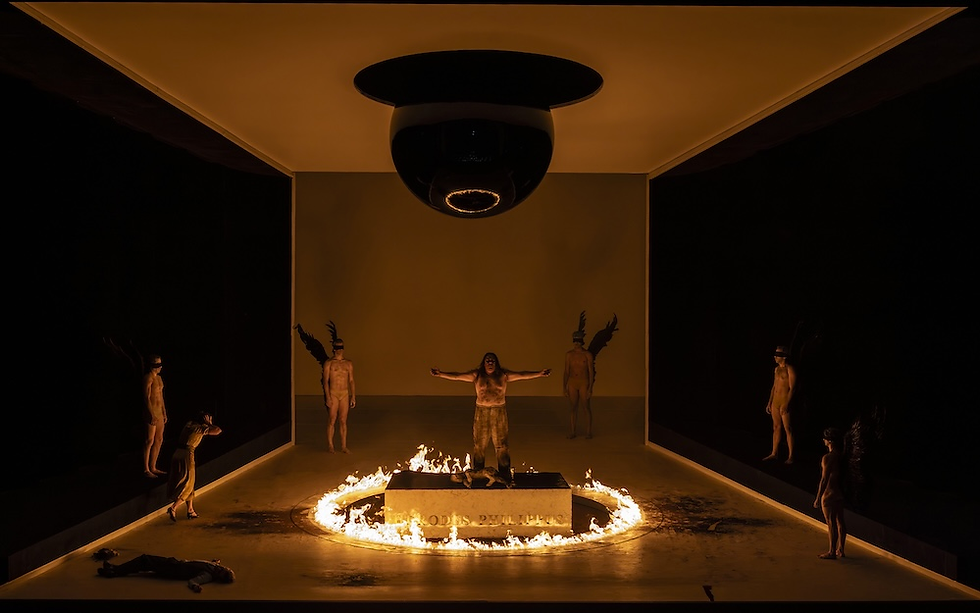
Damiano Michieletto’s staging, originally created for La Scala, approached Wilde and Strauss with striking directness rather than conceptual provocation. Although psychologically layered, the production never betrayed the opera itself. Instead, Michieletto explored the emotional and traumatic origins of Salome’s behaviour, constructing a dark prehistory beneath the text. The imagery of violated innocence and sacrificial symbolism ran throughout the evening, often with disturbing effectiveness.
Visually, the production was extraordinary. The black-winged angels wandering through the palace created a constant atmosphere of impending death, while the use of blood, white costumes and ritualized movement transformed the stage into a space halfway between nightmare and religious vision. Particularly unforgettable was the Dance of the Seven Veils, conceived not as an erotic divertissement but as a horrifying psychological ritual. Miknevičiūtė dominated the scene completely, turning it into the emotional center of the evening.
The production succeeded because it never attempted to overpower Strauss’s music. Instead, stage and score fed each other continuously. Michieletto demonstrated that modern theatrical interpretation does not require the destruction of the libretto or the betrayal of the composer’s intentions. On the contrary, his reading illuminated the opera’s violence, sensuality and spiritual emptiness with rare intelligence.
By the end of the night, the final scene unfolded with such overwhelming intensity that the audience seemed almost unable to react immediately. Silence filled the theatre for a brief moment before the ovation exploded. It was not merely enthusiasm but gratitude after witnessing one of those rare evenings when opera transcends spectacle and becomes something genuinely unsettling, obsessive and unforgettable.
Ilya Tereschkov

Photos: © Miguel Lorenzo - Mikel Ponce | Les Arts


La Salome de Richard Strauss regresó al escenario del Palau de Les Arts de Valencia con la fuerza abrumadora de un sueño febril: hipnótica, brutal, sensual e imposible de olvidar una vez cayó el telón. Al final de la velada quedaba la extraña sensación de que la ópera había transcurrido en un solo aliento, pese a su violencia emocional y su tensión constante. Pocas funciones consiguen despertar ese deseo casi inmediato de volver a empezar desde el principio apenas termina el último acorde. Esta lo logró.
Lo que hizo excepcional la noche no fue únicamente la calidad individual de sus elementos, sino la cohesión casi inquietante entre foso, escena e intérpretes. Todo parecía respirar al mismo tiempo dentro del universo sofocante de Strauss. Y en el centro de todo estuvo la orquesta.
Bajo la dirección de James Gaffigan, la Orquestra de la Comunitat Valenciana ofreció una lectura de una riqueza y una precisión asombrosas. La partitura de Strauss — decadente, lujosa y psicológicamente despiadada — se desplegó con una claridad extraordinaria. El sonido orquestal nunca se volvió opaco, ni siquiera en los clímax más densos, y cada detalle instrumental emergía de forma natural dentro del tejido sonoro. Gaffigan evitó cualquier grandilocuencia vacía y construyó el drama a través de la tensión, el color y un sentido casi cinematográfico del ritmo. Las grandes explosiones orquestales poseían un peso aterrador, mientras que los pasajes más silenciosos conservaban una sensualidad inquietante que hacía aún más perturbadora la violencia posterior.
La propia orquesta pareció inspirada más allá de su ya reconocidísimo nivel. Las cuerdas brillaron con una intensidad nerviosa, los metales atacaron con un fulgor apocalíptico y las maderas colorearon la partitura con igual dosis de lirismo e ironía grotesca. Pocas veces Strauss suena al mismo tiempo tan refinado y tan peligroso.
En el centro de la producción se situó una Salomé hipnótica de Vida Miknevičiūtė. La suya no fue únicamente una victoria vocal, sino una encarnación teatral total del personaje. Strauss escribe el papel con exigencias casi crueles: la soprano debe moverse constantemente entre el lirismo extático, la obsesión enfermiza y la declamación explosiva mientras sobrevive a una orquesta gigantesca. Miknevičiūtė dominó todo ello con una seguridad apabullante.
Su voz atravesó el torrente orquestal con facilidad, estallando en el registro agudo sin dureza alguna y conservando una belleza notable en los momentos más íntimos. Pero lo que hizo inolvidable la interpretación fue su entrega dramática absoluta. No parecía “interpretar” a Salomé, sino habitarla psicológicamente. Cada gesto, cada mirada y cada inflexión vocal revelaban la inestabilidad de una joven atrapada entre el deseo, el trauma y la destrucción. Fue una de esas interpretaciones que dejan al público casi incómodo por su intensidad.
Frente a ella, Nicholas Brownlee ofreció un Jochanaan poderoso e imponente. La producción presentaba al profeta menos como un hombre de carne y hueso que como una figura casi sobrenatural: inmóvil, profética y aterradoramente ajena al mundo corrupto que lo rodea. La enorme autoridad vocal de Brownlee encajó perfectamente con esa visión. Su sonido oscuro y resonante atravesó la orquesta con facilidad y sus condenas cayeron sobre el teatro con fuerza bíblica. Si la puesta en escena limitaba en ocasiones su libertad dramática, vocalmente resultó profundamente impresionante durante toda la noche.
El Herodes de John Daszak fue otro de los grandes aciertos de la velada. El papel exige una mezcla agotadora de paranoia, histeria y sensualidad grotesca, llevando continuamente al tenor al límite. Daszak abrazó por completo la locura del personaje, construyendo un gobernante consumido por el miedo y la obsesión. Aunque aparecieron ciertas tensiones en la zona más aguda, su inteligencia teatral y su absoluta entrega hicieron que el retrato resultara fascinante de principio a fin.
Michaela Schuster aportó veneno y amargura a Herodías, creando un retrato escalofriante de decadencia moral. Christopher Sokolowski cantó Narraboth con un lirismo conmovedor y una presencia vocal poco habitual en el papel, logrando que la obsesión trágica del personaje resultara verdaderamente emotiva y no meramente decorativa. El reparto secundario, incluyendo varios artistas vinculados al Centre de Perfeccionament, mantuvo un nivel notablemente alto.
La producción de Damiano Michieletto, creada originalmente para La Scala, abordó a Wilde y Strauss desde una sorprendente fidelidad antes que desde la provocación conceptual. Aunque psicológicamente compleja, la puesta nunca traicionó la esencia de la obra. Michieletto exploró los orígenes emocionales y traumáticos del comportamiento de Salomé, construyendo una oscura historia previa bajo el libreto. La imaginería de la inocencia violada y el simbolismo sacrificial atravesaban toda la función con una eficacia a menudo perturbadora.
Visualmente, la producción resultó extraordinaria. Los ángeles de alas negras que recorrían el palacio creaban una atmósfera constante de muerte inminente, mientras el uso de sangre, vestuarios blancos y movimientos ritualizados convertían la escena en un espacio situado a medio camino entre la pesadilla y la visión religiosa. Especialmente inolvidable fue la Danza de los Siete Velos, concebida no como un simple episodio erótico sino como un ritual psicológico aterrador. Miknevičiūtė dominó completamente la escena, convirtiéndola en el verdadero centro emocional de la noche.
La producción funcionó precisamente porque nunca intentó imponerse sobre la música de Strauss. Al contrario: escena y partitura se alimentaban mutuamente de forma continua. Michieletto demostró que una lectura teatral moderna no necesita destruir el libreto ni traicionar las intenciones del compositor. Su propuesta iluminó la violencia, la sensualidad y el vacío espiritual de la ópera con una inteligencia poco frecuente.
Al final de la velada, la escena final alcanzó una intensidad tan abrumadora que el público pareció incapaz de reaccionar inmediatamente. Durante unos segundos el teatro quedó sumido en el silencio antes de que estallara la ovación. No fue únicamente entusiasmo, sino gratitud después de asistir a una de esas raras noches en las que la ópera trasciende el espectáculo y se convierte en algo verdaderamente perturbador, obsesivo e inolvidable.
Ilya Tereschkov


Comentarios