
Rheingold! Reines Salzburger Gold!
- Dr. Eloi de Tera
- 31 mar
- 14 min de lectura
Rheingold ist das Vorspiel, das – das möge niemand je vergessen – Richard Wagner buchstäblich ganz am Ende konzipierte, nachdem er den gesamten Rest dessen geschrieben hatte, was ursprünglich eine Trilogie war und tatsächlich auch bleibt – auch das möge niemand vergessen – eine dramatische Trilogie mit einem Vorspiel, Rheingold. Ein Bühnenfestspiel für drei Tage und einen Vorabend.
Es ist das Vorspiel, in dem die Welt noch in Ordnung ist, die Welt noch weder Chaos noch menschliches Drama ist, wie Thomas Mann sagte: „Die Tiefe des Rheins war der unschuldige und erste Zustand der Welt, noch unberührt von Gier und Fluch. So war auch der Anfang der Musik. Eine Welt von Symbolen, dicht gefügt aus dem Es-Dur-Akkord.“ Das Urmotiv, das Es-Dur, der Anfang vor der Schöpfung, bevor die Wellen des Rheins zu klingen beginnen. Es ist ein einziger Ton, der alles zusammenfasst, was danach kommen wird. Der Anfang ist das Reine, das Unverdorbene, und so hat Wagner es festgelegt.
Richard Wagner arbeitet seit seiner Dresdner Jugend daran, als er in der Staatsbibliothek die Manuskripte entdeckt, die ihn dazu inspirieren sollten, und trägt dieses enorme literarische und musikalische Monument in seinem Kopf. Wagner schuf es fast sein ganzes Leben lang und schrieb es mehrfach um, angefangen mit seinem Willen, Siegfrieds Tod – wie die Götterdämmerung ursprünglich hieß – zu streichen und die endgültige Fassung zu schreiben, ebenso wie die Umbenennung von Der junge Siegfried in Siegfried oder dieses Vorspiels, das uns hier beschäftigt und ursprünglich Der Raub des Rheingoldes hieß.
All das, woran Wagner sein ganzes Leben arbeitete, indem er das Gesamtkunstwerk schuf, das niemand je zu erreichen vermocht hat – und doch glauben manche, ohne auch nur annähernd über Wagners Wissen zu verfügen, man könne es einfach umdrehen und dabei ganz selbstverständlich das Wort Gesamtkunstwerk benutzen, um ihr eigenes Ergebnis zu beschreiben oder als Ausrede dafür, dass sie es angeblich ergänzen.
So präsentiert nun in diesen Tagen Kirill Serebrennikov mit dem Segen der Salzburger Osterfestspiele ein neues Rheingold. Ohne Zweifel ist dies ein effektvolles und visuelles Rheingold, hinter dem große Arbeit ebenso wie ein enormer finanzieller Aufwand stehen. Allein die projizierten Videos wurden in Island gedreht. Wie ich immer denke: Viele Regisseure schauen viele Filme, lesen aber nicht Wagners Szenenanweisungen, und in diesem Fall waren sie offenbar von Godland so fasziniert, dass sie ebenfalls losziehen wollten, um das unberührte Island zu suchen.
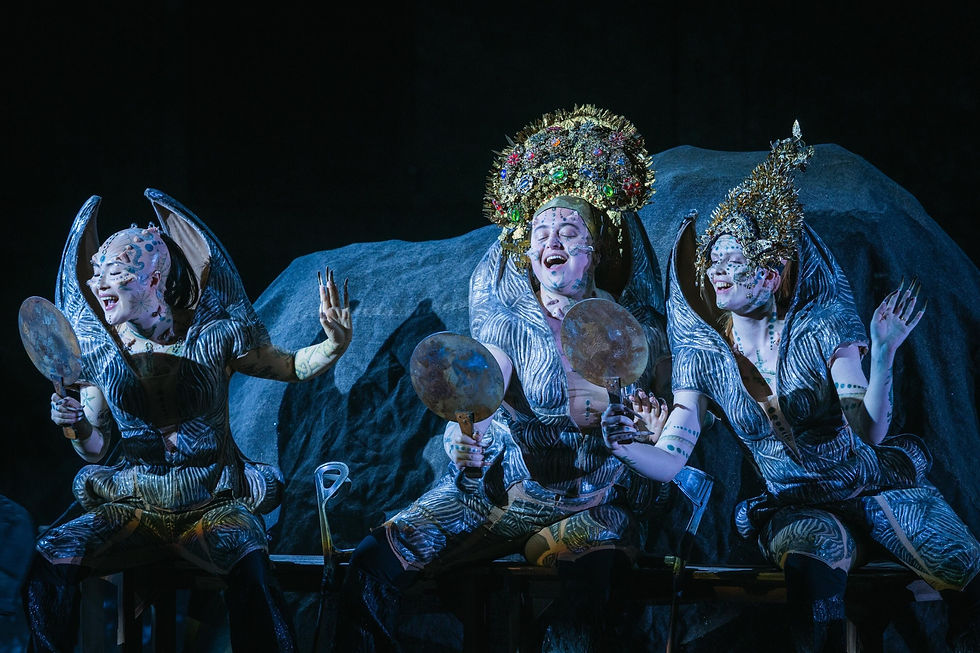
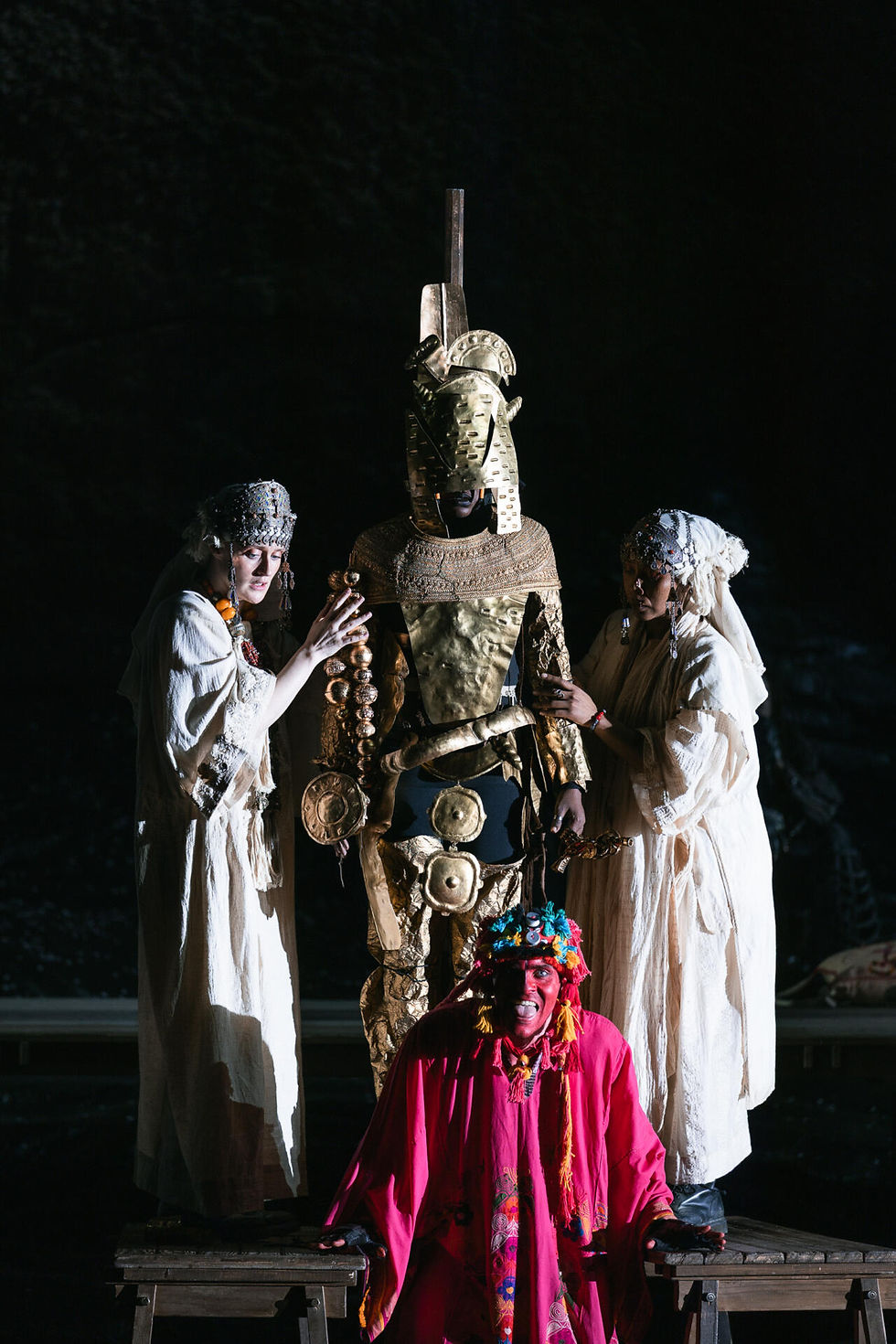
Zweifellos ist das Ergebnis ein außergewöhnliches filmisches Werk, das auf die Felsenreitschule projiziert wird, mit fragmentierten Leinwänden à la Calixto Bieito – nichts wirklich Neues. Aber man muss sagen, dass das Beste dieser Produktion die Charakterisierungen und die Kostüme sind, hinter denen eine enorme handwerkliche Arbeit von Kunsthandwerkern aus aller Welt steht, wie Serebrennikov selbst berichtet hat. Es gibt eine Inspiration durch das griechische Drama, ein Echo von Pier Paolo Pasolini und seiner Medea mit Maria Callas, es gibt auch eine Inspiration durch den Ring von David McVicar in Lüttich, und es gibt viele Referenzen, aber das Ergebnis ist außergewöhnlich, visuell makellos und zumindest eine Erleichterung, keinen Wotan in Jeans oder in einem Bordell zu sehen, was sonst in jeder aktuellen Modernität üblich wäre. In diesem Sinne sind die Kostüme das Wunderbarste dieser Produktion.
Mit einigen Anklängen, die meiner Meinung nach aus einem Anime oder von Hayao Miyazaki stammen, und vor allem mit etwas, das mich zunehmend ermüdet: die ständige und vollständige Vereinnahmung der Opernbühne durch die Welt und Ästhetik des Techno, in der diese Regisseure leben und für die sie sich offenbar mehr interessieren als für die Oper selbst, wobei sie ohne Zweifel Anyma und andere visuelle Techno-Künstler kopieren. Aber lasst Wagner in Ruhe. Außerdem hat man diese Produktion von Serebrennikov bereits gesehen – mit der Fura dels Baus in Valencia oder mit McVicar in Strasbourg. Sie ist nichts Neues, auch wenn sie visuell interessante Aspekte haben mag.
Aber ja, das große Problem ist das Konzept. Denn es kann kein anderes Konzept geben als Wagner selbst, und tatsächlich kündigte Serebrennikov an, dass sie es als die vier Jahreszeiten verstehen, wobei die Götterdämmerung im Herbst enden wird. Es ist eine interessante Idee, die sogar klug wäre, wenn – wie ich erklärt habe – nicht die Tatsache bestünde, dass es keine Tetralogie gibt, sondern drei Tage und einen Vorabend, weshalb die Idee keinen Sinn ergibt. Es kann keine Jahreszeiten vor der Schöpfung geben, und im Rheingold befinden wir uns bei der Schöpfung aus dem Nichts.
Und außerdem haben sie beschlossen, das Konzept umzudrehen, sodass alles – laut Serebrennikov – in einer zerstörten Welt beginnt, einer beendeten Welt. Wagner entschied, dass die Welt in der Götterdämmerung endet, damit aus dem Ende der Götter eine neue Welt hervorgeht, und bitte – wir können nicht ändern, was ihm einen großen Streit mit Friedrich Nietzsche eingebracht hat.
Andererseits ist die Arbeit der Genies von Recycle Group hervorzuheben, einer Gruppe von „Bildhauern“ im Stil von Jaume Plensa, die mit 3D-Druck zu millionenschweren Preisen arbeiten. Das heißt, dass das Rad mit den neun Tierkreisfiguren in 3D, die einen Ring bilden, ohne Zweifel 80 % des Budgets dieses Rheingold gekostet hat. Die Endprodukte der Recycle Group sind außergewöhnlich, aber von einem Rheingold hat man viel mehr erwartet.
Dann schließen wir die Augen, und das Es-Dur beginnt, das Urmotiv, gespielt aus den Tiefen der Erde von den Berliner Philharmoniker unter der Leitung von Kirill Petrenko, und wir vergessen diese irdische Welt. Rheingold unter Petrenkos Dirigat wird zu Rheines Gold, reines Gold, wahres Gold, Salzburger Gold.
Die Wellen, in denen die Rheintöchter vor dem Beginn der Katastrophe ruhig ruhen, erschienen mit dem Tempo und dem Glanz, den Petrenko erklingen ließ, wie echte Wellen. Und obwohl es weder Walhall noch Regenbogen noch Regen gab, so wie Wagner es geschrieben hat, sondern stattdessen eine sinnlose Neuerfindung, gab es sie doch aus dem Orchestergraben durch die Philharmoniker. Denn das Schlussleitmotiv von Walhall ist Klangarchitektur, und niemand stellt sie besser dar als die Berliner.
Wotan nahm zum ersten Mal Gestalt an in der Figur von Christian Gerhaher, einem männlichen Herrscher des Liedgesangs. Dies ist kein Wotan von überirdischer Klangmacht; und doch liegt gerade in dieser Zurücknahme die besondere Schönheit seines Debüts: ein Gott, der nicht von oben herrscht, sondern von den Umständen mitgerissen zu werden scheint, voller Emotionen, aber ohne vokale Kraft.
Der ganze Abend atmete durch Stimmen voller Gefühl, die Kirill Petrenko mit sicherer Hand formt. Leigh Melrose gibt der Figur des Alberich Gestalt und seinem Schmerz Ausdruck mit einem beweglichen, kraftvollen Bariton; Thomas Cilluffo erweckt als gequälter Mime Mitgefühl, ohne in das übliche Nasale zu verfallen; Brenton Ryan glänzt als listiger Loge; und es ist eine Wohltat, Catriona Morison (Fricka) zu hören, die ihren Mezzo im Dialog mit ihrem göttlichen Gatten Wotan nuanciert einsetzt. Auch Le Bu bleibt nicht im Schatten, dessen Fasolt mit großer Klangkraft, aber zugleich sehr menschlich grollend erklingt.
Am Ende krönte der stärkste Applaus Petrenko, während Serebrennikov einen eher verhaltenen Beifall sowie einige Buhrufe erhielt. Buhrufe sind nicht nötig, aber Wagner und sein Gesamtkunstwerk lassen sich nicht einfach umdrehen. Es hätte nichts gekostet, dasselbe zu machen: Film in Island (so konnten die Techno-Kinder Island sehen, die Walen und die wilden Vögel des Nordens und einen Urlaub genießen, den das Publikum bezahlt), großartige Kostüme im afro- und altgriechischen Stil, 3D-Skulpturen usw. Aber bitte keine Verdrehung der Geschichte und keine vier Jahreszeiten, wenn es drei sind – dann hätten wir auch BRAVO gerufen.
Dr. Eloi de Tera



Rheingold is the prelude that—let no one ever forget—Richard Wagner quite literally conceived at the very end, after having written the entire remainder of what was originally a trilogy and in fact still remains—let no one forget this either—a dramatic trilogy with a prelude, Rheingold. Ein Bühnenfestspiel für drei Tage und einen Vorabend.
It is the prelude in which the world is still in order, the world is not yet chaos nor human drama, as Thomas Mann said: “The depth of the Rhine was the innocent and first state of the world, still untouched by greed and curse. Thus, in this way, was also the beginning of music. A world of symbols, densely woven from the E-flat major chord.” The Ur-motif, E-flat major, the beginning before creation, before the waves of the Rhine begin to sound. It is a single note that condenses everything that will come afterward. The beginning is the pure, the uncorrupted, and thus Wagner established it.
Richard Wagner worked on this from his youth in Dresden, when he discovered in the State Library the manuscripts that would inspire him, and carried this enormous literary and musical monument in his mind. Wagner created it over almost his entire life and rewrote it multiple times, beginning with his intention to eliminate Siegfrieds Tod—as Götterdämmerung was originally called—and to write the definitive version, as well as the renaming of Der junge Siegfried to Siegfried, or of this prelude that concerns us here, which was initially called Der Raub des Rheingoldes.
All of this, which Wagner worked on throughout his entire life, creating the Gesamtkunstwerk that no one has ever managed to equal—and yet some believe that, without possessing even remotely Wagner’s knowledge, they can simply turn it upside down and, on top of that, use the word Gesamtkunstwerk with ease to describe their final product or as an excuse to claim that they help to complement it.
Thus, these days Kirill Serebrennikov, with the blessing of the Salzburger Osterfestspiele, presents a new Rheingold. Without a doubt, this is an effect-driven and visual Rheingold, behind which there is great work as well as a great financial expenditure. Suffice it to say that the videos projected were filmed in Iceland. As I always think, many stage directors watch many films but do not read Wagner’s stage directions, and in this case they were evidently mesmerized by Godland and wanted to go themselves to seek out the untouched land of Iceland.
Without a doubt, the result is an extraordinary cinematic work that is projected onto the Felsenreitschule with fragmented screens à la Calixto Bieito—nothing new in any case. But it must be said that the best part of this production is the characterizations and the costumes, behind which there is a great deal of manual work carried out by artisans from all over the world, as Serebrennikov himself has recounted. There is an inspiration from Greek drama, an echo of Pier Paolo Pasolini and his Medea with Maria Callas, there is also an inspiration from the Ring of David McVicar in Liège, and there are many references, but the result is extraordinary, visually impeccable and, at the very least, it relieves us not to see a Wotan dressed in jeans or in a brothel, which would be the most usual thing to see in any modern staging nowadays. In this sense, the costumes are the most wonderful aspect of this production.
With certain touches that I believe come from some anime or from Hayao Miyazaki, and above all with something that is beginning to tire me: the continuous and absolute appropriation of the operatic stage by the world and aesthetic of techno in which these stage directors live and which clearly interests them more than opera itself, undoubtedly copying Anyma and other visual techno artists of the moment. But leave Wagner alone. Moreover, Serebrennikov’s production has already been seen—with Fura dels Baus in Valencia or with McVicar in Strasbourg. It is nothing new, even if it may have visually interesting elements.
But yes, the big problem is the concept. Because there can be no other concept than Wagner himself, and in fact Serebrennikov announced that they conceive it as the four seasons, with Götterdämmerung ending in autumn. It is a curious idea and one that would be intelligent, if it were not for the fact that, as I have explained, there is no tetralogy but rather three days and a preliminary evening, which is why the idea makes no sense. There can be no seasons before Creation, and in Rheingold we are at Creation from nothing.
And moreover, they decided to turn the concept around and, in fact, everything begins, according to Serebrennikov, in a destroyed world, a finished world. Wagner decided that the world ended in Götterdämmerung so that from the end of the gods a new world would arise, and please—we cannot change what cost him a major quarrel with Friedrich Nietzsche.
On the other hand, the work of the geniuses of Recycle Group should be highlighted, a group of “sculptors” in the style of Jaume Plensa, who sculpt with 3D printers at million-euro prices. That is to say that the wheel of the nine zodiac figures in 3D forming a ring has, without a doubt, cost 80% of the budget of this Rheingold. The final products of Recycle Group are extraordinary, but one expected much more from a Rheingold.
Then we close our eyes, and E-flat major begins, the Ur-motif, played from the depths of the Earth by the Berliner Philharmoniker under the direction of Kirill Petrenko, and we forget this earthly world. Rheingold under Petrenko’s baton becomes Rheines Gold, pure gold, true gold, Salzburg gold.
The waves in which the Rhine maidens rest peacefully before the beginning of the disaster seemed like real waves with the tempo and brilliance that Petrenko managed to produce. And although there was neither Valhalla nor rainbow nor rain as Wagner wrote it, but rather a senseless reinvention, they were there from the pit in the hands of the Philharmonic. For the final leitmotif of Valhalla is sonic architecture, and no one reproduces it better than the Berliners.
Wotan took shape for the first time in the figure of Christian Gerhaher, a male sovereign of the world of Lied. This is not a Wotan of superhuman sonic power; and yet precisely in this restraint lies the particular beauty of his debut: a god who does not rule from above, but who seems carried along by the tide of his circumstances, full of emotion but without vocal strength.
The entire evening breathed through voices full of feeling, which Kirill Petrenko shapes with a sure hand. Leigh Melrose gives form to the figure of Alberich and expresses his anguish with an agile, powerful baritone of great strength and character; Thomas Cilluffo, as the tormented Mime, awakens compassion without falling into the usual nasal tone of the trade; Brenton Ryan shines as the cunning Loge; and it is a delight to hear Catriona Morison (Fricka), who deploys her mezzo with nuance in dialogue with her divine husband Wotan. Nor does Le Bu remain in the shadows, whose Fasolt resounds with great sonic power and at the same time with a deeply human grumbling.
In the end, the strongest applause crowned Petrenko, while Serebrennikov received rather restrained applause along with a few boos. Boos are not necessary, but Wagner and his Gesamtkunstwerk cannot simply be turned upside down. It would have cost nothing to do the same: film in Iceland (so the techno kids could see Iceland, the whales and the wild birds of the north and enjoy a holiday paid for by the audience), magnificent costumes in Afro and ancient Greek styles, 3D sculptures, etc. But no twisting of the story and no four seasons when there are three—then we would also have shouted BRAVO.
Dr. Eloi de Tera


Rheingold es el preludio que -nunca lo olvide nadie- Wagner concibió textualmente al final de todo, después de haber escrito todo el resto de la que en un principio era una triología y de hecho sigue siendo -que tampoco nadie lo olvide- una triología dramática con un preludio, Rheingold. Ein Bühnenfestspiel für drei Tage und einen Vorabend. Es el preludio, donde el mundo aún está en orden, el mundo aún no es caos ni drama humano, como dijo Thomas Mann: "La profundidad del Rin era el inocente y primer estado del mundo, aún sin tocar por la codícia y la maldición. Así, de esta forma, también lo era el principio de la música. Un mundo de símbolos trabado densamente a partir del acorde de mí bemol mayor". El Urmotiv, el mí bemol mayor, el principio antes de la creación, antes de que las olas del Rhein empiezen a sonar. Es una sola nota que condensa todo lo que vendrá después. El principio es lo limpio, lo incorrupto y así lo marcó Wagner. Richard Wagner, desde su juventud de Dresden, cuando descubre los manuscritos que le inspiraran para ello en la Staatsbibliothek de Dresden, está trabajando en su cabeza este enorme monumento literario y musical. Wagner lo creó durante casi toda su vida y lo reescribió variadas veces, empezando por su voluntad de eliminar el Siegfrieds Tod -como se llamaba en un principio Götterdämmerung- y escribir el definitivo, como el cambio de nombre de Der Junge Siegfried a Siegried o en este preludio que nos ocupa que inicialmente llamado Der Raub des Rheingoldes. Todo esto que Wagner trabajó durante toda su vida creando la Gesamtkunstwerk que nadie ha sido capaz de igualar, algunos creen que sin ni tener los mismos conocimientos de Wagner pueden girarlo del revés y encima utilizar la palabra Gesamtkunstwerk con facilidad para describir su producto final o como excusa para decir que ellos ayudan a complementar dicha Gesamtkunstwerk.
Así es que en estos días Kirill Serebrennikov con la bendición del Salzburger Osterfestpiele presenta un nuevo Rheingold. Sin lugar a dudas, este es un Rheingold efectista y visual, detrás del cual hay un gran trabajo, así como un gran dispendio económico. Ya solo cabe saber que los vídeos que se proyectan se fueron a grabar a Islandia. Como siempre pienso, muchos directores de escena, miran muchas películas pero no leen las descripciones de escena de Wagner y en este caso quedaron ensimismados con Godland y quisieron irse también ellos a buscar la tierra imberbe de Islandia. Sin lugar a dudas el resultado es una obra cinematográfica extraordinaria que se proyecta sobre la Felsenreitschule con pantallas fragmentadas a lo Calixto Bieito, nada nuevo en todo caso. Pero debemos decir que lo mejor de esta producción son las caracterizaciones y los vestidos, detrás de los que hay un gran trabajo manual hecho por artesanos de todo el mundo, según Serebrennikov ha contado. Hay una inspiración el drama griego, un eco de Pasolini y su Medea con Callas, hay también una insipiración en el Ring de McVicar de Liége y hay muchas referencias, pero el resultado es extraordinario, visualmente impecable y, por lo menos, nos alivia no ver a Wotan vestido con tejanos o en un prostíbulo que sería lo más habitual de ver en cualquier modernidad del momento. En este sentido, el vestuario es lo más maravilloso de esta producción. Con algunos toques que creo salidos de algun anime o de Miyazaqui y sobre todo, algo que ya me empieza a cansar, que es la continua y absoluta apropiación de la escena operística por el mundo y la estética techno en el que viven estos directores de escena que la ópera no les interesa nada, copiando sin duda a Anyma y otros artistas del visual techno del momento. Pero dejen a Wagner tranquilo. Además la producción de Serebrennikov ya se ha visto con Fura dels Baus en Valencia o con la de McVicar en Liège, no es nada nueva aunque pueda tener cosas visulamente interesantes.
Pero, si, el gran pero es el concepto. Porque no puede haber otro concepto que Wagner y de hecho Serebrennikov anunció que lo conciben como las 4 estaciones, Götterdämmerung terminará con el otoño. Es una idea curiosa y que sería inteligente, si no fuera que, como explico, no existe tetralogía, sino drei Tage und einen Vorabend, por lo que la idea no tiene sentido. No puede haber estaciones antes de la Creación y en Rheingold estamos ante la Creación desde la nada. Y resulta que además decidieron girar el concepto y, de hecho, todo empieza según Serebrennikov en un mundo destruído, un mundo acabado. Wagner decidió que el mundo terminaba en Götterdämmerung para que del final de los Dioses saliera un nuevo mundo y, por favor, no podemos cambiar lo que le costó un enorme enfado con Nietzsche. Por otra parte, cabe destacar el trabajo de los genios de Recycle Group. Un grupo de "escultores" a lo Plensa, que esculpen con impresora 3D a precios millonarios. Es decir que la rueda de las 9 figuras zodiacales en 3D que forman un anillo ha costado, sin lugar a dudas, el 80% del presupuesto de este Rheingold. Son extraordinarios en los productos finales los de Recycle Group pero de un Rheingold se esperaba mucho más.
Entonces cerramos los ojos y empezó el mí bemol, el Urmotiv, tocado desde las profundidades de la Tierra por los Berliner Philarmoniker bajo la dirección de Kirill Petrenko y nos olvidamos de este mundo terrenal. Rheingold en la batuta de Petrenko se convierte en Rheines Gold, oro puro, oro verdadero, oro de Salzburgo. Las olas donde descansan apacibles las Rheintöchter antes del inicio del desastre, parecieron olas verdaderas con el tempo y el brillo que Petrenko supo hacer sonar. Y aunque no hubo Walhalla ni arco iris ni lluvia tal y como Wagner lo dejó escrito, sino en una reinvención sin sentido, si lo hubo desde el foso a manos de los Philarmoniker. Porque el leitmotiv final del Walhalla es arquitectura sonora y nadie la reproduce mejor que los de Berlín.
Wotan tomó vida por primera vez en la figura de Christian Gerhaher, soberano masculino del universo del lied. No es este un Wotan de poder sonoro celestial; y, sin embargo, en esa renuncia a lo desmesurado florece la singular belleza de su debut: un dios que no gobierna desde la altura, sino que parece arrastrado por el oleaje de sus propias circunstancias, lleno de emociones pero sin fuerza vocal. Toda la velada respiró a través de voces cargadas de sentimiento, que Petrenko cincela con pulso firme. Leigh Melrose da cuerpo a la figura de Alberich y a su desgarro con un barítono ágil y vibrante de gran potencia y carácter; Thomas Cilluffo, como el castigado Mime, despierta compasión sin caer en el habitual nasalismo del oficio. Brenton Ryan, como el astuto Loge, brilla cual burlador de ingenio afilado. Y es un bálsamo la presencia de Catriona Morison (Fricka), que hace florecer su mezzosoprano en matices sutiles al dialogar con su divino esposo Wotan. No queda en la sombra Le Bu, cuyo Fasolt resuena con fuerza imponente y, al mismo tiempo, con un gruñido profundamente humano. Al final, el aplauso más fervoroso coronó a Petrenko, mientras que Serebrennikov recibió un reconocimiento más templado, salpicado aquí y allá por algunos abucheos. No hace falta abuchear pero Wagner ni su Gesamtkunstwerk no se pueden girar. No costaba nada hacer lo mismo: película en Islandia (así los niños del techno vieron Islandia y las balenas y los pajarillos salvajes del norte y se pegaron unas vacaciones que pagan los espectadores), vestidos geniales de tipo afro y griego antiguo, esculturas en 3D, etc... Pero nada de girar la historia ni de las 4 estaciones, cuando son 3 y aún le habríamos gritado BRAVO.
Dr. Eloi de Tera


Comentarios