
Die Walküre am Deutsche Oper Berlin
Die Walküre, Richard Wagner
Deutsche Oper Berlin
17.05.2026
Director: Stefan Herheim
Conductor: Sir Donald Runnicles
Voices: Matthew Newlin (Siegmund), Tobias Kehrer (Hunding), Jordan Shanahan (Wotan), Elisabeth Teige (Sieglinde), Annika Schlicht (Fricka), Trine Møller (Brünnhilde), Martina Welschenbach (Helmwige), Felicia Moore (Gerhilde), Maria Motolygina (Ortlinde), Aleksandra Meteleva (Waltraute), Arianna Manganello (Siegrune), Karis Tucker (Roßweiße),
Nicole Piccolomini (Grimgerde), Lauren Decker (Schwertleite), Eric Naumann (Hundingling).
Orchester der Deutschen Oper Berlin
Nach dem unfokussierten „Rheingold“ am Vorabend gelingt es Stefan
Herheim auch im so verdichteten ersten Aufzug der „Walküre“ nicht,
eine stringente und spannende Personenregie zu entwickeln. Neben
den drei singenden Personen im ersten Aufzug gibt es bei ihm eine
vierte Rolle, den stummen „Hundingling“ (Herrlich unzivilisiert: Eric
Naumann). Diesem (Zieh-)Sohn von Sieglinde und Hunding wird übel
mitgespielt. Von allen Beteiligten wird er mindestens einmal als Geisel
genommen, geschlagen und bedroht, am Ende sogar von Sieglinde
ermordet. Zwar trauert Hunding zu Beginn des zweiten Aufzugs um
ihn, echte Zuneigung zu einer Bezugsperson, und somit eine
Motivation für die Eskalation der Handlung, ist aber nicht wirklich
gegeben.
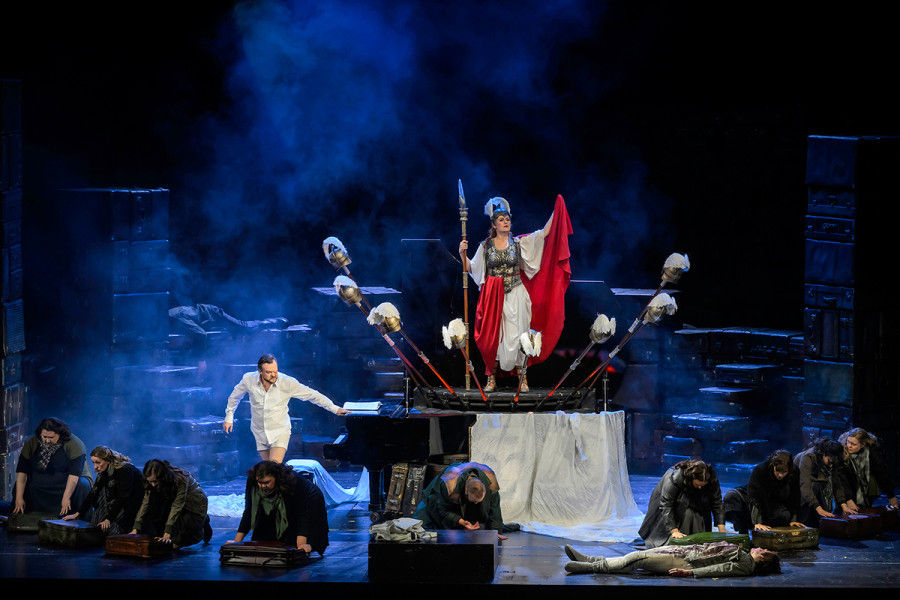
Auch im weiteren Verlauf fehlt ein roter Faden. Fricka entspringt
weiterhin einer 20er Jahre Revue (hervorragend dargestellt und
äußerst nuanciert gesungen von Annika Schlicht) und die Walküren im
dritten Aufzug sind mit billigen Flügelhelmen und übergroßen
Speeren eine Art Amateur Impro-Truppe (stark: Felicia Moore als
Gerhilde und Maria Motolygina als Ortlinde). Das alles passt nicht zu
den übermenschlichen Themen, die Wotan und Brünnhilde nebenbei
verhandeln wollen.
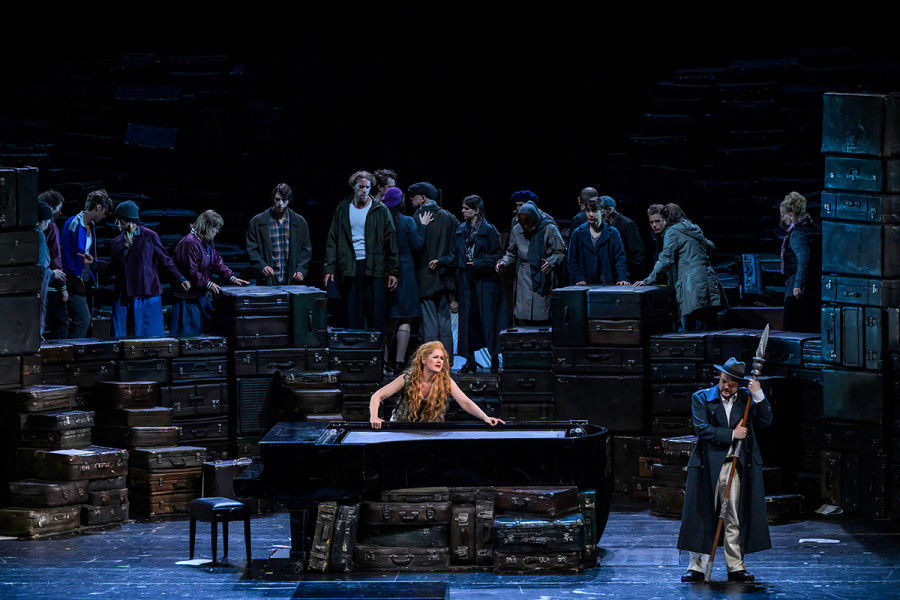
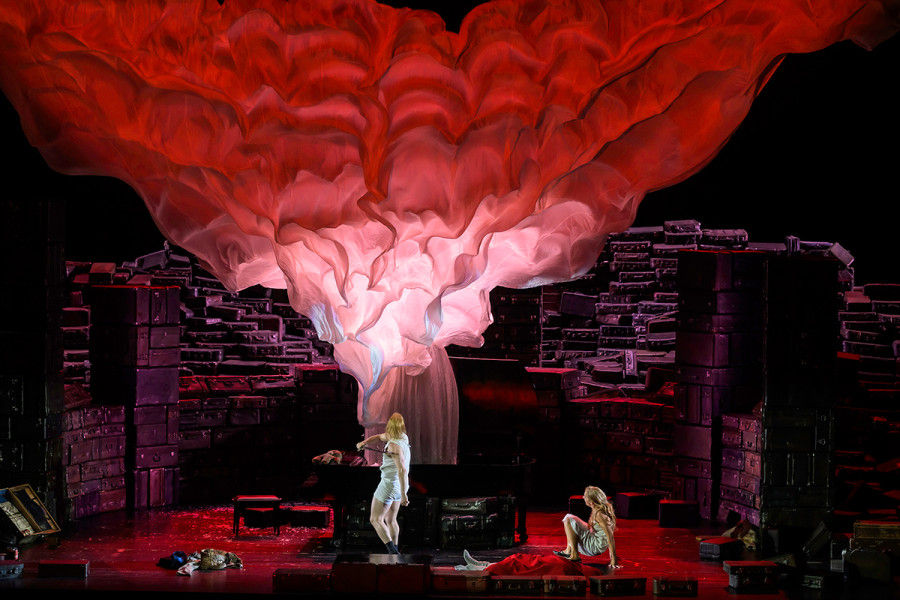
Ein weiteres Manko ist die Verengung der Spielfläche. Da fast die
gesamte Bühne mit Kofferbergen bedeckt ist, bleibt der schmale Raum
zwischen dem Konzertflügel und der Bühnenkante. Hier stehen sich in
der Todesverkündung Brünnhilde, Siegmund und Sieglinde oft im
Weg und es wird nie ganz klar, wer nun wen sehen kann, wer sich
versteckt oder ob Brünnhilde hinter ihrem verspiegelten Schild
wirklich unsichtbar ist.
Vokal ist vor allem diese Szene einer der Höhepunkte des Abends.
Trine Møller hat bei ihrem ersten Auftritt noch mit der Intonation in
den Spitzentönen zu kämpfen. In „Siegmund, sieh auf mich“ schwingt
aber bereits viel Mitleid, Sorge und Zweifel mit. Møllers Brünnhilde
ist eine nachdenkliche und doch kämpferische Frau, die klug lange
Phrasen gestalten kann.
Matthew Newlin gab sein Debüt als Siegmund. Einen besseren
Interpreten für diese Rolle wird man derzeit kaum finden. Selbst
Michael Spyres hatte die letzten beiden Jahre in Bayreuth Probleme,
die tückischen Registerwechsel auszugleichen. Newlin gelingt das
phänomenal und überrascht mit einer (fast bass-) baritonal fundierten
Tiefe, die er mühelos und ohne den Fokus zu verlieren in die höheren
Lagen führt. Ganz wie bei seinem exorbitanten Parsifal-Debüt vor
einigen Wochen bleibt er seiner eigentlich lyrischen Stimme treu und
ist doch auch dazu fähig, dramatische Ausbrüche mit enormer
Lautstärke Nachdruck zu geben. Beeindruckend seine
Textverständlichkeit und sein naturalistisch lockeres Spiel. Wie er
„Hehr bist du;...“ ganz besonnen ansetzt und sich bis zu „umfängt
Siegmund Sieglinde dort?“ vokal mit größtem Ausdruck aufbäumt hat
ganz große Klasse. Bravissimo Matthew Newlin.
Seine Schwester Sieglinde singt Elisabeth Teige mit großer
Sopranstimme, leicht angespannt und etwas wenig Kraft, um hohe
Töne nicht nur zu jauchzen, sondern auch ausreichend lang zu halten.
Jordan Shanahan, der Alberich der Serie von vor zwei Jahren, ist zum
Göttervater aufgestiegen. Seine Darstellung des Wotan war
fokussierter als bei seinem Debüt an der Oper Köln, was auch an den
besseren akustischen Verhältnissen liegen könnte. Sein knorriges
Timbre und spürbarer Wille, großen Rollenvorbildern gerecht zu
werden, führten zu einer äußerst adäquaten Leistung.
Sehr rollendeckend mit tiefschwarz dröhnendem Bass sang Tobias
Kehrer Hunding.
Sir Donald Runnicles ließ sein Orchester selten von der Leine. Nach
einem starken Beginn verflachte das Tempo erneut und die Spannung
ließ nach. Ausladende Passagen wie die „Winterstürme“, das „hehrste
Wunder“ und auch Wotans Abschied wurden zu einer heiklen
Herausforderung für die Atemkontrolle der Darstellenden. Neben
einigen Ungereimtheiten im Blech waren sehr schön jedoch das
Cellosolo im ersten Aufzug, die Soli Holzbläser und die immer
punktgenauen Pauken.
Niklas Vogel
Photos: Bettina Stöß


After the unfocused Rheingold of the previous evening, Stefan Herheim once again fails, even in the highly concentrated first act of Die Walküre, to develop a coherent and compelling stage direction. Besides the three singing characters of the first act, he introduces a fourth figure: the silent “Hundingling” (wonderfully uncivilised: Eric Naumann). This foster son of Sieglinde and Hunding is treated terribly throughout the performance. Every character takes him hostage, threatens or beats him at least once, and in the end he is even murdered by Sieglinde herself. Although Hunding mourns him at the beginning of the second act, there is never any genuine sense of affection toward him, nor therefore a convincing motivation for the escalation of the drama.
As the evening progresses, the production still lacks any real unifying thread. Fricka continues to emerge from what seems like a 1920s revue — magnificently portrayed and sung with enormous nuance by Annika Schlicht — while the Valkyries in the third act, equipped with cheap winged helmets and oversized spears, resemble some sort of amateur improvisation troupe (especially strong were Felicia Moore as Gerhilde and Maria Motolygina as Ortlinde). None of this truly fits the superhuman themes that Wotan and Brünnhilde are attempting to negotiate alongside them.
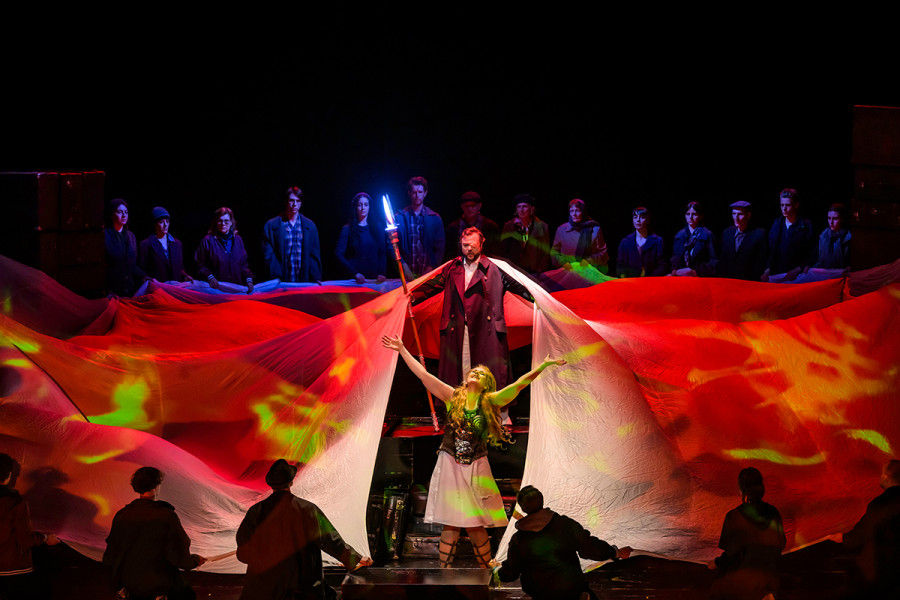
Another weakness is the severe limitation of the stage space. Since almost the entire stage is covered with mountains of suitcases, only the narrow strip between the grand piano and the edge of the stage remains available. During the Todesverkündigung scene, Brünnhilde, Siegmund and Sieglinde frequently block each other physically, and it never becomes entirely clear who can actually see whom, who is hiding, or whether Brünnhilde is really invisible behind her mirrored shield.
Vocally, however, this scene becomes one of the great highlights of the evening. Trine Møller initially struggles with intonation in the upper register during her first appearance, but already in “Siegmund, sieh auf mich” there is a profound sense of compassion, concern and doubt in her singing. Møller’s Brünnhilde is a reflective yet combative woman, capable of shaping long Wagnerian phrases intelligently.
Matthew Newlin made his debut as Siegmund, and at present it is difficult to imagine a finer interpreter of the role. Even Michael Spyres encountered difficulties in Bayreuth over the past two years with the treacherous register transitions of the part. Newlin masters them phenomenally, surprising with a lower register grounded in an almost bass-baritonal sonority, which he carries effortlessly into the upper range without ever losing focus.
As in his extraordinary Parsifal debut a few weeks ago, he remains faithful to the essentially lyrical nature of his voice while still being fully capable of producing dramatic outbursts of enormous intensity and volume. His textual clarity and natural stage presence are deeply impressive. The way he begins “Hehr bist du…” with such calm restraint before vocally rising toward “umfängt Siegmund Sieglinde dort?” with overwhelming expressive force is truly magnificent. Bravissimo, Matthew Newlin. His sister Sieglinde is sung by Elisabeth Teige with a large soprano voice, though somewhat tense and occasionally lacking enough strength to sustain the highest notes rather than merely attack them.
Jordan Shanahan, Alberich in the cycle two years ago, has now ascended to the role of the god Wotan. His portrayal was more focused than in his debut at Oper Köln, perhaps also helped by the more favourable acoustic conditions here. His rugged timbre and his obvious determination to live up to the great interpreters of the role resulted in a very convincing performance.
Tobias Kehrer sang Hunding with a role-appropriate, deeply black and resonant bass.
Sir Donald Runnicles rarely allowed the orchestra to play with complete freedom. After a powerful opening, the tempi once again became increasingly sluggish and the dramatic tension faded. Expansive passages such as the “Winterstürme,” the “hehrste Wunder,” and even Wotan’s Farewell became challenging tests of breath control for the singers.
Despite some inconsistencies in the brass section, the cello solo in the first act, the woodwind solos and the always perfectly precise timpani playing were all particularly beautiful.
Niklas Vogel



Después del desenfocado Rheingold de la noche anterior, Stefan Herheim tampoco consigue en el tan concentrado primer acto de Die Walküre desarrollar una dirección escénica coherente y verdaderamente intensa. Además de los tres personajes cantantes del primer acto, introduce una cuarta figura: el silencioso “Hundingling” (magníficamente incivilizado: Eric Naumann). Este hijo adoptivo de Sieglinde y Hunding es maltratado constantemente durante toda la representación. Todos los personajes lo toman como rehén, lo golpean o amenazan al menos una vez y, finalmente, es incluso asesinado por Sieglinde. Aunque Hunding parece llorarlo al comienzo del segundo acto, nunca llega a percibirse un auténtico afecto hacia él ni, por tanto, una motivación dramática convincente para la escalada de violencia posterior.
A lo largo de la función sigue faltando un auténtico hilo conductor. Fricka continúa pareciendo salida de una revista musical de los años veinte — magníficamente interpretada y cantada con enorme sutileza por Annika Schlicht — mientras que las valquirias del tercer acto, equipadas con cascos alados baratos y lanzas desproporcionadas, recuerdan más bien a una troupe amateur de improvisación (especialmente destacadas Felicia Moore como Gerhilde y Maria Motolygina como Ortlinde). Nada de ello encaja realmente con los temas sobrehumanos que Wotan y Brünnhilde intentan desarrollar paralelamente.
Otro problema importante es la reducción extrema del espacio escénico. Como prácticamente todo el escenario está cubierto de montañas de maletas, solo queda libre la estrecha franja situada entre el piano de cola y el borde del escenario. En la escena de la Anunciación de la Muerte, Brünnhilde, Siegmund y Sieglinde se obstaculizan constantemente entre sí, y nunca queda claro quién puede ver a quién, quién está escondido o si Brünnhilde es realmente invisible tras su escudo espejado.
Vocalmente, sin embargo, esta escena constituye uno de los grandes momentos de la noche. Trine Møller todavía muestra ciertos problemas de afinación en el registro agudo durante su primera aparición, pero ya en “Siegmund, sieh auf mich” transmite una profunda mezcla de compasión, preocupación y duda. Su Brünnhilde es una mujer reflexiva y combativa al mismo tiempo, capaz de construir largas frases wagnerianas con inteligencia.
Matthew Newlin debutaba como Siegmund, y actualmente resulta difícil imaginar un intérprete mejor para este papel. Incluso Michael Spyres tuvo problemas en Bayreuth durante los últimos años para igualar los complicados cambios de registro del personaje. Newlin los resuelve de manera fenomenal, sorprendiendo con un grave de sonoridad casi bajo-baritonal que conduce hacia el registro agudo sin perder jamás el centro de la voz.
Como ya sucedió en su extraordinario debut como Parsifal hace apenas unas semanas, permanece fiel al carácter esencialmente lírico de su instrumento y, aun así, es plenamente capaz de lanzar explosiones dramáticas de enorme intensidad y volumen. Resultan especialmente impresionantes tanto su claridad en la dicción como su naturalidad escénica. La manera en que inicia “Hehr bist du…” con una serenidad casi íntima para después elevarse vocalmente hasta “umfängt Siegmund Sieglinde dort?” con una fuerza expresiva desbordante es sencillamente magistral.
Bravissimo, Matthew Newlin. Su hermana Sieglinde está interpretada por Elisabeth Teige con una gran voz de soprano, aunque algo tensa y a veces insuficientemente sólida para sostener los agudos más exigentes en lugar de simplemente atacarlos.
Jordan Shanahan, Alberich en este mismo ciclo hace dos años, asciende ahora al papel de Wotan. Su interpretación resultó más centrada que en su debut en la Ópera de Colonia, quizá también favorecida por unas condiciones acústicas más adecuadas. Su timbre áspero y su evidente voluntad de estar a la altura de los grandes referentes del personaje dieron como resultado una interpretación muy convincente. Tobias Kehrer cantó Hunding con un bajo profundamente negro, resonante y perfectamente apropiado para el rol.
Sir Donald Runnicles raramente permitió que la orquesta se liberara por completo. Tras un comienzo poderoso, los tempi volvieron a relajarse excesivamente y la tensión dramática decayó progresivamente. Pasajes amplios como los “Winterstürme”, el “hehrste Wunder” e incluso la despedida de Wotan se convirtieron en auténticos desafíos de respiración para los cantantes.
A pesar de ciertas irregularidades en los metales, resultaron especialmente bellos el solo de violonchelo del primer acto, los solos de madera y unos timbales siempre absolutamente precisos.
Niklas Vogel


Comentarios