
Amazing Walküre in Monte-Carlo
Die Wälkure, Richard Wagner
Opera de Monte-Carlo
29.01.2026
The year at the Monte-Carlo Opera, under the direction of Cecilia Bartoli, has begun with tremendous force. These past few days, the first day of the Ring Cycle has been staged in Davide Livermore's new production, following last season's presentation of the prelude, Das Rheingold. Livermore's staging is bold, innovative, powerful, and extraordinary. It is a production brimming with stage presence, reaching its full potential in the very well-executed artificial intelligence projections and in a completely renewed concept of Wagner's Ring Cycle. If Rheingold was already epic, Die Walküre has been something otherworldly. Sieglinde resembles a Little Red Riding Hood fleeing from Wotan, the wolf, by hiding in the wreckage of an airplane, which seems to be a substitute for Grane, because horses are nowhere to be seen in Livermore's version. The entire first day of the Ring of the Nibelung, when the great human drama that Wagner conceived fully erupts, is reduced by Livermore to a child's game, somewhere between the Brothers Grimm and Star Wars. Although the production is marvelous, the world that Wagner created in the tetralogy represented the atavistic drama of humanity, which has little to do with a children's story.
But if many are focusing on the Ring cycles at the Opéra Bastille in Paris, La Scala, or Thielemann's in Berlin, they are mistaken, because musically and scenically, the great Wagnerian event is taking place in Monte Carlo. Les Musiciens du Prince, with period instruments and Gianluca Capuano at the podium, deliver a supreme, compact, extraordinary, and flawless interpretation of Wagner. This orchestra is a paranormal phenomenon; it sounds like no other. The sound is brilliant, clear, precise, without a single error, monumental. Capuano doesn't flinch; he conducts with force and pure precision, energy and passion, yet with the delicacy of a great music scholar. Orchestrally, this Wagner is better than many of those heard even in Bayreuth itself.
The cast is equally impressive, beginning with a stellar Siegmund embodied by tenor Joachim Bäckström. His Siegmund is one of the finest to be heard today, full of power, lyricism, perfection, and fortitude. Alongside him, the very young Libby Sokolowski creates a monumental Sieglinde. The Sokolowskis are a family touched by the grace of the God of music. She sang a Sieglinde with a somewhat weaker start in the first act, but in the second and third acts, her voice became pure adrenaline with soaring high notes and a demonstration of power and vocal projection that foreshadows the birth of a great diva.
Wilhelm Schwinghammer as Hunding was convincing and powerful with a magnificent voice. Ekaterina Semenchuk sang an epic Fricka. The soprano always leaves her personal mark on every role she performs, and her Fricka is extraordinary, in every register of her voice, from the guttural growls to the soaring high notes. Fricka is a role that often gets lost in many productions, but here in Monte Carlo, Semenchuk delivered the best one heard in a long time.
Nancy Weissbach gave an outstanding, energetic, and vibrant performance as Brünnhilde. She isn't heroic, nor is she the best, and the high notes sound a bit metallic in the Valkyrie's famous screams, but she was excellent nonetheless. Sofia Fomina, Natalia Tanasii, Maire Therese Carmack, Heike Wessels, Anna Lapkovskaja, Freya Apffelstaedt, Niamh O’Sullivan, and Kaarin Cecilia Phelps sang the role of her sisters in the third act and were the best group of Valkyries I've heard in recent times, and I've heard quite a few. Compact, ethereal, without shouting, but full of vocal power.
Daniel Scofield's Wotan was effective, with a certain vocal energy at the most necessary moments, good technique and diction, but in his middle register he disappeared behind the orchestra and came across as a Wotan lacking vocal strength. In a larger theater, he would have been barely audible.
We eagerly await Siegfried in this marvelous production, which is captivating everyone who has seen it, not only visually but especially with its vocal and orchestral excellence.
Dr. Eloi de Tera


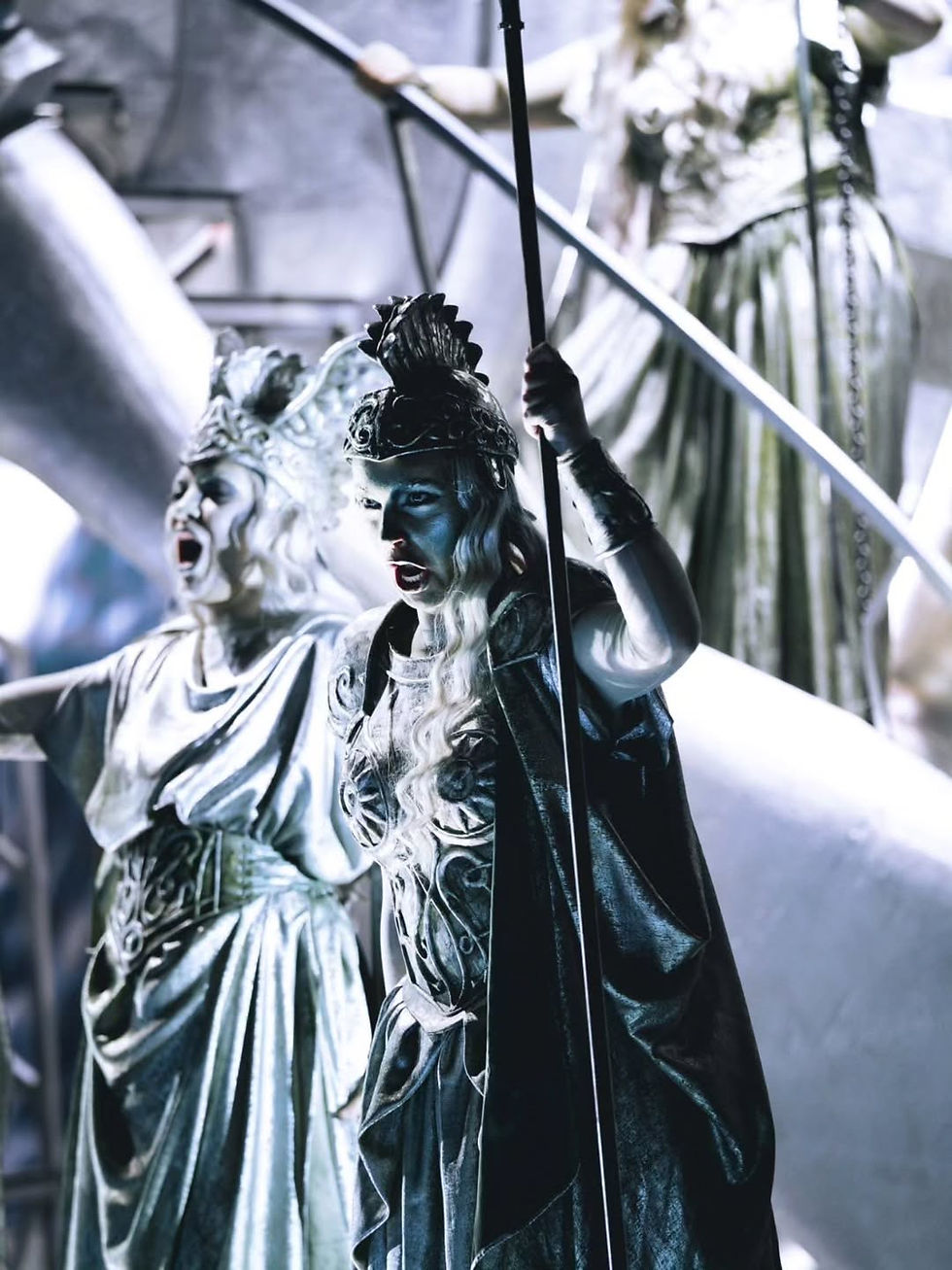


El año empieza en la Ópera de Monte-Carlo, dirigida por Cecilia Bartoli, con enorme fuerza. Estos últimos días se ha puesto en escena la primera jornada del Anillo del Nibelungo en la nueva producción de Davide Livermore, después de que la pasada temporada se presentara el preludio Das Rheingold. La puesta en escena de Livermore es audaz, innovadora, potente y extraordinaria. Es una producción llena de fuerza escénica, que cobra toda su potencia en las proyecciones de inteligencia artificial muy bien logradas y en todo un concepto renovado del Ring wagneriano. Si Rheingold ya fue épico, Die Walküre ha sido algo de otro mundo. Sieglinde parece una Caperucita Roja que huye del lobo Wotan escondiéndose en los restos de un avión, que parece ser el sustituto de Grane, porque los caballos no aparecen por ninguna parte en la versión de Livermore. Toda la primera jornada del Anillo del Nibelungo que es cuando el gran drama humano que Wagner concibe estalla por completo, Livermore lo convierte en un juego de niños, entre los hermanos Grimm y la Guerra de la Galaxias. Aunque la producción es maravillosa, el mundo que Wagner creó en la tetralogía representaba el drama atávico de la humanidad que poco tiene de cuento infantil.
Pero si muchos se están fijando en los Rings de la Ópera Bastille de París o del Teatro alla Scala o el de Thielemann en Berlín, se equivocan, porque musicalmente y escenográficamente el gran acontecimiento wagneriano se está produciendo en Monte-Carlo. Les Musiciens du Prince, con instrumentos antiguos y Gianluca Capuano a la cabeza hacen una lectura de Wagner suprema, compacta, extraordinaria sin matices. Esta orquesta es un fenómeno paranormal, suena como ninguna. El sonido es brillante, nítido, preciso, sin error alguno, monumental. Capuano no tiembla, dirige con fuerza y matemática pura, energía y arrebato, pero con la delicadeza del filólogo de la música. En lo orquestal este Wagner es mejor que muchos de los que se escuchan hasta en el mismísimo Bayreuth.
El reparto no se queda corto tampoco, empezando con un Siegmund sideral encarnado por el tenor Joachim Bäckström. Su Siegmund es uno de los mejores que se pueden oír hoy en día, lleno de fuerza, lirismo, perfección y entereza. A su lado, la jovencísima Libby Sokolowski crea una Sieglinde monumental. Los Sololowski son una família tocada por la gracia del Dios de la música. Ella ha cantado una Sieglinde con un inicio en el primer acto algo más débil, pero en el segundo acto y el tercero su voz se convirtió en pura adrenalina con unos agudos y una demostración de fuerza y proyección vocal que augura el nacimiento de una gran diva.
Wilhelm Schwinghammer como Hunding fue convincente y fuerte con una gran voz. Ekaterina Semenchuk cantó una Fricka épica. La soprano siempre deja su huella personal en cada papel que interpreta y su Fricka es extraordinaria, en cada registro de su voz, desde lo gutural a los agudos. Fricka es un papel que en muchas producciones queda desdibujado, pero aquí en Monte-Carlo Semenchuk ha firmado la mejor que se ha oído en mucho tiempo.
Nancy Weissbach interpretó una Brünnhilde sobresaliente, enérgica y vibrante. No es heroica ni la mejor y los agudos suenan muy metálicos en los célebres gritos de la Walkiria, pero resultó excelente. Sofia Fomina, Natalia Tanasii, Maire Therese Carmack, Heike Wessels, Anna Lapkovskaja, Freya Apffelstaedt, Niamh O’sullivan y Kaarin Cecilia Phelps fueron sus hermanas en el tercer acto y han sido el mejor grupo de Walkirias que he escuchado en los últimos tiempos y llevo unas cuantas. Compactas, siderales, sin griterío, pero llenas de fuerza vocal.
El Wotan de Daniel Scofield tuvo efecto, cierta energía vocal en los momentos más necesarios, buena técnica y dicción, pero en su registro medio desaparecía detrás de la orquesta y resultó un Wotan faltado de fuerza vocal. En un teatro más grande no se habría oído apenas.
Esperamos ya el Siegfried de esta maravillosa producción que está cautivando a todo el que la ha visto en lo visual, pero sobre todo en la excelencia vocal y orquestal.
Dr. Eloi de Tera


Comentarios