
Boring Semi Rossini
Semiramide, Gioacchino Rossini
Gran Teatre del Liceu, Barcelona
13th Mai 2026
Concert Versión
Paolo Arrivabene, conductor
Vasilisa Berzhanskaya, Semiramide
Franco Fagioli, Arsace
Mirco Palazzi, Assur
Maxim Mironov, Idreno
Patricia Calvache, Azema
Antonio di Matteo, Oroe
Carlos Cosías, Mitriane
Marc Pujol, L'espectre de Nino
In recent times there has been a trend, stretching from the Champs-Élysées to Madrid and Barcelona, of bringing operas on tour in concert version or, simply out of economic laziness, staging operas in concert form. The very concept of opera does not exist when performed without scenery; it is to kill the art form itself. This time they carried out yet another experiment: an opera in concert version and in a single performance only, the greatest possible mistake. Because that was already a premonition of what was going to happen: that we would have an orchestra created solely for that particular performance and that it would not have rehearsed sufficiently. A four-hour opera cannot be performed in a single performance without weeks and weeks of prior rehearsals. Moreover, since many of the soloists and members of the orchestra of the Gran Teatre del Liceu were performing Werther the day before and the day after, the orchestra was not exactly the resident one but rather a composite ensemble created for the occasion, and these experiments at the Liceu never work because the result is automatically clearly deficient by not involving the usual ensemble.
Paolo Arrivabene did his job and managed to make the orchestra assembled for that day sound reasonably good, as often happens at the Liceu in the moments of greatest orchestral volume and power, though not when Rossini requires a certain lyricism in the pianissimos, where the evening became soporific. The maestro’s tempi were correct, but one could see a conductor focused solely on looking at the score and very little at the singers or the orchestra, with gestures that were often difficult to understand.
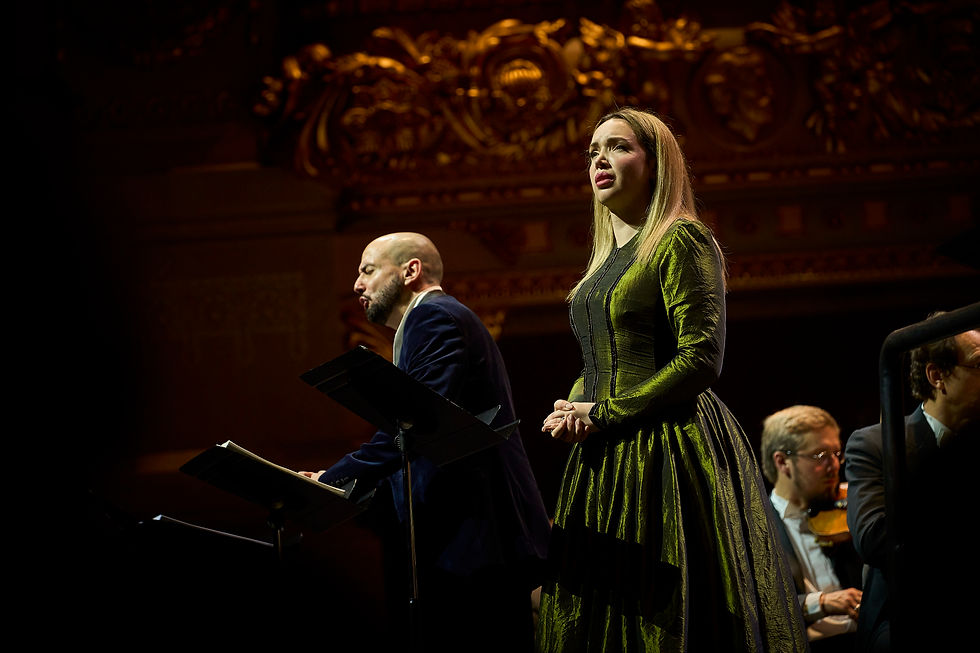
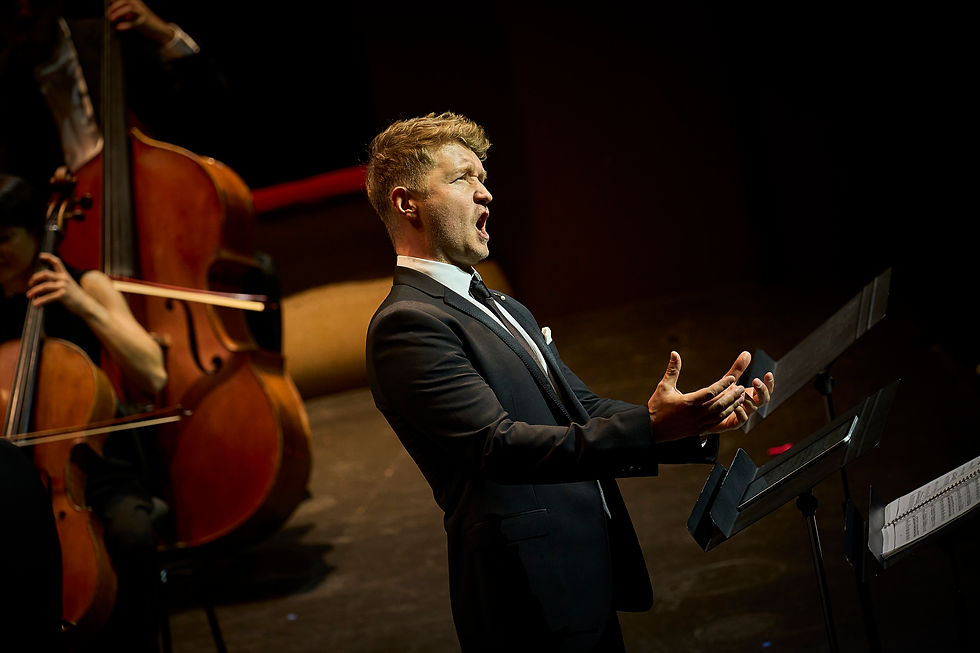
The same happened with some singers such as the celebrated Fagioli, who sang without ever detaching himself from the score. He was not the only one to give the impression of sight-reading, which is rather inconsiderate towards the audience and made it clear that there had been little rehearsal overall. On the contrary, Vasilisa Berzhanskaya and Maxim Mironov, the two great stars of the evening, came fully prepared with their roles and without the express need to read constantly. Berzhanskaya, as Semiramide, was magnificent, with a voice that burst brilliantly in the upper register full of energy, always dominating her voice above the orchestra. In her middle register she was less energetic, but her Semiramide proved to be of surprising beauty. Maxim Mironov was the revelation of the evening, with a splendid tenor voice, not overwhelmingly powerful but with admirable legato and commendable breath control. The beauty of his timbre is electrifying. Franco Fagioli in the role of Arsace did not live up to his name; his voice could barely be heard and the role was not well prepared. Special mention must be made of Carlos Cosías, a Catalan tenor who is always given secondary roles at the Liceu and who deserves to sing a principal role at the theatre every year, because whatever role is placed before him he approaches with excellent cum laude distinction, and this was the case with his Mitriane. Despite being a role with few appearances on stage, he sang it spectacularly with a total display of timbre and technique. Patricia Calvache as Azema was convincing and beautiful in voice, Mirco Palazzi was also noteworthy, and Antonio Di Matteo completed the cast with a correct interpretation.
The Liceu chorus, perhaps a little bored from spending four hours seated on stage — I do not know how they did not fall asleep, because at times the quality of the music was enough to make one sleepy — performed Rossini’s beautiful choruses with mastery and great success.
Ilya Tereschkova

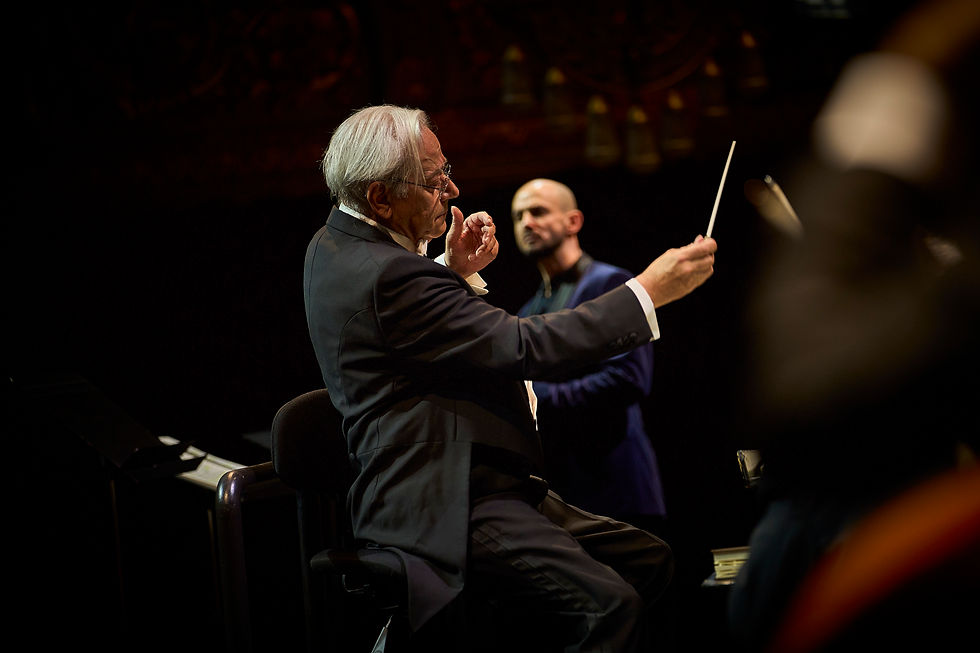
Existe en el último tiempo una moda, que va desde los Champs Elysées a Madrid y Barcelona, de traer óperas en versión concierto en gira o directamente, por pereza económica, realizar óperas en versión concierto. No existe el concepto ópera si se realiza sin escenografía, es matar al propio arte. Esta vez realizaron un nuevo experimento, una ópera en versión concierto y en una única función, error máximo. Porque eso ya era una premonición de lo que iba a suceder: que tendríamos una orquesta creada solo para la función en cuestión y que no se habría ensayado lo suficiente. Una ópera de cuatro horas no puede hacerse en una sola función sin semanas y semanas de ensayos previos. Además, como muchos de los solistas y miembros de la orquesta del Gran Teatre del Liceu, estaban tocando el día antes y el día después Werther, la orquesta no era exactamente la titular sino un compuesto creado para la ocasión y estos experimentos en el Liceu nunca funcionan porque el resultado es automáticamente claramente deficiente por no tratarse del conjunto habitual. Paolo Arrivabene hizo su labor y consiguió que la orquesta hecha a medida para aquel día sonara medianamente bien, como acontece a menudo en el Liceu, en los momentos de más volumen y potencia orquestal, pero no cuando Rossini requiere cierto lirismo en pianissimos, donde la velada resultó soporífera. Los tempi del maestro resultaron correctos, pero se vio a un director concentrado solamente en mirar la partitura y poco a los cantantes o la orquesta, con una gesticulación que muchas de las veces resultaba poco entendible.
Lo mismo sucedía con algunos cantantes como el célebre Fagioli que cantaba sin desprenderse de la partitura. No solo él dio esa sensación de cantar a vista, lo cual resulta poco amable con el público y dejo claro que se había ensayado poco en general. Por lo contrario, Vasilisa Berzhanskaya y Maxim Mironov, las dos grandes estrellas de la noche, venían con el papel sabido y sin necesidad expresa de leerlo todo el tiempo. Berzhanskaya, como Semiramide, estuvo pletórica, con una voz que estalla brillante en los agudos llenos de energía, dominando en todo momento su voz por encima de la orquesta. En su registro medio resultaba menos energica pero su Semiramide ha resultado ser de una belleza sorprendente. Maxim Mironov fue la revelación de la noche, con una voz de tenor esplendida, no potentísima, pero con un legato admirable y un fiato encomiable. La belleza de su timbre es electrizante. Franco Fagioli en el papel de Arsace no hizo honor a su nombre, su voz ni se podía escuchar y el papel no estaba bien trabajado. Cabe destacar a Carlos Cosías, que es un tenor catalán a quién siempre le dan en el Liceu papeles secundarios y merecería cantar cada año un rol principal en el teatro porque cualquier papel que se le pone delante lo afronta con excelente cum laude y este fue el caso de su Mitriane, a pesar de ser un papel con pocas apariciones en escena, lo cantó de forma espectacular con un derroche de timbre y tecnica total. Patricia Calvache como Azema resultó convincente y bella en su voz, Mirco Palazzi también resultó destacable y Antonio di Matteo completó con una correcta interpretación el reparto.
Los coros del Liceu un poco aburridos de estar 4 horas sentados en escena, yo no sé como no se durmieron, porque la calidad algunas veces de la música era para dormirse, interpretaron con maestría y gran acierto los bellos coros de este Rossini.
Ilya Tereschkova


Comentarios