
Marvellous Giulio Cesare at Les Arts
At Palau de les Arts Reina Sofía, excellence is almost expected. Yet expectation can still be surpassed—on rare evenings when everything aligns and opera transcends its own form. This Giulio Cesare in Egitto by Georg Friedrich Händel belonged to that fragile category: the unforgettable.
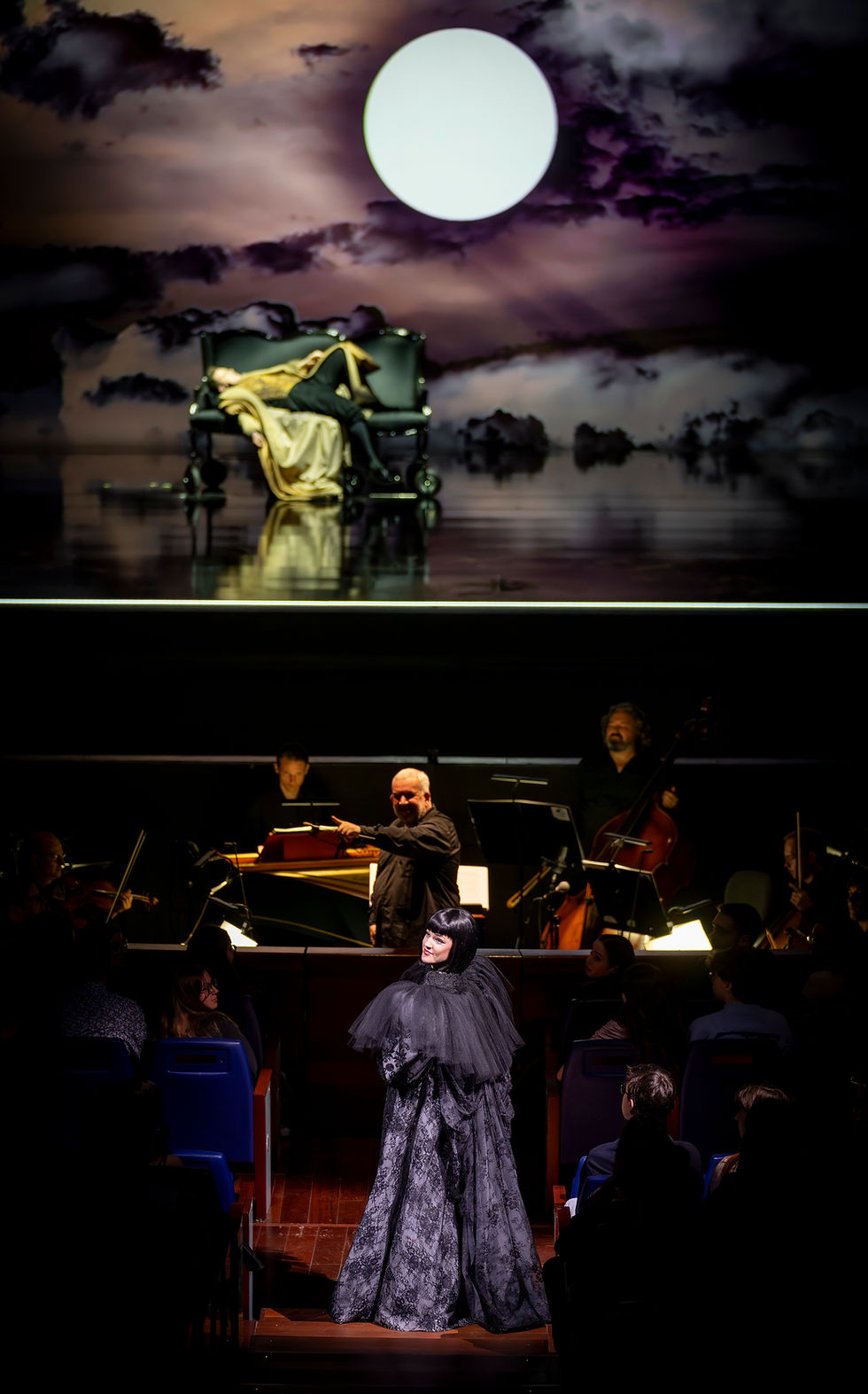
Marc Minkowski stood at the center, not as a controller of forces but as their catalyst. With the Orquestra de la Comunitat Valenciana, he shaped a sound that balanced historical awareness with modern vitality. The phrasing breathed, the textures remained transparent, and the rhythmic energy carried the drama forward without ever forcing it. His gestures—fluid, almost lateral—seemed to sculpt the air rather than impose structure upon it.
Then came Cleopatra.
Marina Monzó approached the role not as a stylistic exercise, but as an act of transformation. Her voice, pristine in technique, became a palette of emotional color. “V’adoro, pupille” unfolded like an intimate ritual, her presence dissolving the boundary between stage and audience. “Da tempeste” sparkled with controlled brilliance. But it was “Piangerò” that revealed the core of her artistry: a finely spun line of sound, expanding and fading with exquisite control, carrying a quiet, devastating sincerity.
Opposite her, Aryeh Nussbaum Cohen offered a Cesare of clarity and finesse, his agile tone lending itself naturally to Handelian virtuosity. His exchange with Stephan Rougier in “Se in fiorito ameno prato” became a moment of pure theatrical delight—voice and violin intertwining in a playful, almost competitive dialogue that electrified the hall.
Sara Mingardo brought depth and gravitas to Cornelia, her performance imbued with a quiet dignity that resonated deeply. Cameron Shahbazi shaped Tolomeo with a sharp theatrical edge, while Arianna Vendittelli allowed Sesto to evolve gradually into a figure of resolve. Jean-Philippe McClish grounded the vocal landscape with a sonority of reassuring weight.
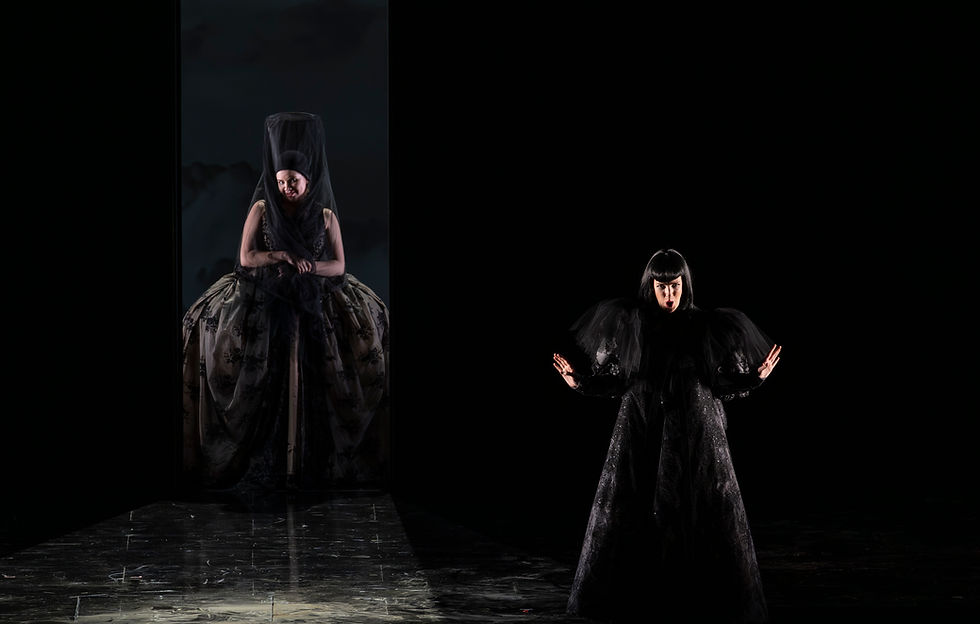
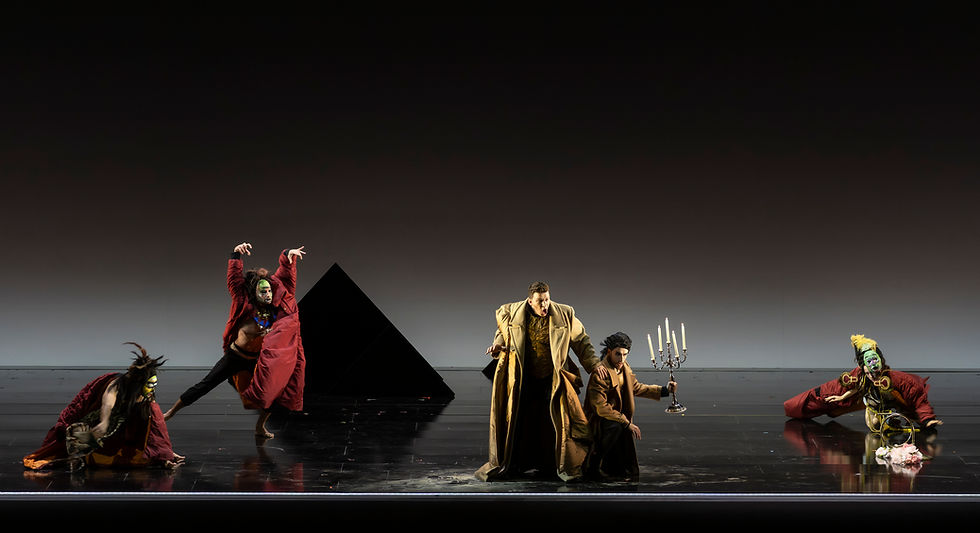
The staging by Vicent Boussard, enhanced by the refined designs of Christian Lacroix, framed the opera as a reflection on artifice itself: a theatre within the theatre, where identities are assumed and relinquished. The visual language—elegant, shadow-driven, meticulously composed—created a sequence of living tableaux. Beneath its beauty, however, lingered a more ambiguous perspective: an Egypt imagined as other, distant, and perhaps deliberately stylized through a European gaze.
As the final notes faded, applause did not feel like a conclusion but a resistance—to ending, to returning. After nearly four hours, the audience remained, as if departure would dissolve what had just been experienced.
Some performances impress. Others endure. This one, unmistakably, will linger.
Angela Dessen
Photos: Miguel Lorenzo and Mikel Ponce


En Palau de les Arts Reina Sofía, la excelencia no es una promesa: es una costumbre. Pero hay noches en las que esa costumbre se rompe a sí misma para convertirse en algo irrepetible. Así sucedió con Giulio Cesare in Egitto de Georg Friedrich Händel, donde cada elemento pareció alinearse como si obedeciera a una secreta coreografía del destino.
En el centro de esa alquimia estuvo Marc Minkowski, que no dirigía: respiraba con la Orquestra de la Comunitat Valenciana. Su lectura no buscó la imitación historicista, sino su espíritu: un pulso vivo, una tensión elástica, una claridad que permitía a la música hablar con voz propia. Bajo su gesto —nervioso, lateral, casi danzado— la partitura se desplegó como un organismo palpitante, lleno de matices y contrastes. Era barroco, sí, pero también presente, inmediato.
Y entonces apareció Cleopatra.
Marina Monzó no debutó en el barroco: lo habitó. Su canto, de perfección técnica luminosa, se transformó en vehículo de expresión pura. En “V’adoro, pupille”, descendiendo entre el público, suspendió el tiempo en un instante de intimidad casi irreal. En “Da tempeste”, su voz se volvió fuego controlado, precisión sin artificio. Pero fue en “Piangerò” donde alcanzó una verdad desnuda: un hilo de voz que crecía y se desvanecía como una respiración compartida. Allí no hubo teatro, sino emoción.
Frente a ella, Aryeh Nussbaum Cohen construyó un Cesare de elegante virtuosismo, de brillo ágil y refinado. Su diálogo con el violín en “Se in fiorito ameno prato” —junto a Stephan Rougier— fue un juego de espejos entre voz e instrumento, un instante de júbilo que arrancó al público de su silencio reverente.
La Cornelia de Sara Mingardo fue pura humanidad, una presencia que no necesitaba imponerse para conmover. A su alrededor, Cameron Shahbazi dibujó un Tolomeo inquietante y burlón, mientras Arianna Vendittelli fue encontrando en Sesto un pulso heroico que crecía con la noche. Jean-Philippe McClish aportó una gravedad sonora que anclaba el conjunto.
La escena de Vicent Boussard, envuelta en la elegancia de Christian Lacroix, propuso un juego de espejos: teatro dentro del teatro, identidades que se construyen y se disuelven. Sombras, líneas puras, imágenes detenidas en una belleza casi pictórica. Y, sin embargo, bajo esa estilización, latía una lectura más incómoda: la del Egipto como alteridad, como reflejo de una mirada ajena.
Al final, tras casi cuatro horas, nadie parecía dispuesto a romper el hechizo. El público permanecía en pie, no solo aplaudiendo, sino reteniendo algo que sabía efímero. Porque hay noches que no se repiten: solo permanecen, suspendidas, en la memoria.
Angela Dessen


Comentarios