
Gold, Glanz und große Stimmen
Aida, Giuseppe Verdi
Semperoper Dresden
13. Juni 2026
Conductor: Erik Nielsen
Orchestra: Sächsische Staatskapelle Dresden
Production: Katharina Thalbach
Aida: Ailyn Pérez Radamès: Francesco Meli Amneris: Eve-Maud Hubeaux Amonasro: Oleksandr Pushniak Ramfis: Soloman Howard, Der König: Alexandros Stavrakakis
Mit ihrer Aida-Produktion setzt die Semperoper auf das, was diese Oper seit ihrer Entstehung ausmacht: große Gefühle, große Bilder und große Stimmen. Katharina Thalbach verzichtet weitgehend auf Aktualisierungen oder politische Deutungen und erzählt Verdis Oper erstaunlich werknah. Goldene Bühnenräume, an das alte Ägypten erinnernde Kostüme und monumentale Tableaux prägen den Abend. Immer wieder entstehen eindrucksvolle Momentaufnahmen von beinahe gemäldeartiger Schönheit. Besonders die Lichtregie sorgt für starke Atmosphären und verleiht vielen Szenen eine berührende Intensität.
Nicht alles überzeugt gleichermaßen. Die zahlreichen Tanzeinlagen wirken oft wie ein Fremdkörper. Vor allem in der Triumphszene stören sie eher, als dass sie den Abend bereichern. Verdis Musik setzt ohnehin auf Wiederholung, da verstärkt die Choreografie diesen Eindruck. Davon abgesehen gelingt der Regie jedoch eine hervorragende Personenführung, die die emotionalen Konflikte der Figuren stets in den Mittelpunkt stellt.
Am Pult verfolgte Erik Nielsen einen ausgesprochen sängerfreundlichen Ansatz. Die Sächsische Staatskapelle Dresden begleitete aufmerksam und flexibel, gab den Solisten viel Raum für individuelle Gestaltung und reagierte sensibel auf jede Phrase. Besonders in den großen Szenen der Amneris war diese Freiheit deutlich spürbar. Allerdings geriet der musikalische Fluss stellenweise etwas schleppend. Nicht jede Spannung wurde konsequent gehalten. Der Chor hingegen präsentierte sich in hervorragender Verfassung und verlieh den Massenszenen die notwendige Wucht und Geschlossenheit.
Gesanglich war der Abend hochkarätig besetzt. Aliyn Pérez mag zunächst nicht dem klassischen Bild einer Aida entsprechen. Ihre Stimme besitzt weniger von jener dunklen, dramatischen Schwere, die man häufig mit der Rolle verbindet. Doch je länger der Abend dauerte, desto stärker zog sie das Publikum in ihren Bann. Besonders im dritten Akt steigerte sie sich enorm und wurde zur emotionalen Mitte der Aufführung. Ausdrucksstärke, musikalische Intelligenz und vokale Sicherheit machten ihre Interpretation schließlich zu einer beeindruckenden Leistung.
Francesco Meli war als Radamès von Beginn an die prägende Männerstimme des Abends. Sein Tenor verfügt über genau jene italienische Strahlkraft, die diese Partie verlangt. Die Stimme trägt mühelos durch den Raum, besitzt ein markantes Squillo und bleibt dabei stets kontrolliert und elegant geführt. Beeindruckend war vor allem seine Ausdauer: Während viele Radamès im Verlauf des Abends Ermüdungserscheinungen zeigen, blieb Meli bis zum Schluss frisch, präsent und vokal souverän. Eine Idealbesetzung für diese Rolle.
Auch Eve-Maud Hubeaux hinterließ als Amneris einen starken Eindruck. Ihr edler Mezzo verbindet Schönheit des Klanges mit dramatischer Autorität. Die Figur gewann durch ihre Interpretation an menschlicher Tiefe, ohne an vokaler Präsenz einzubüßen. Selten erscheint Amneris so attraktiv, dass man Radamès beinahe empfehlen möchte, sich doch für sie zu entscheiden.
Soloman Howard verlieh Ramfis mit seinem markanten Bass große Autorität. Seine Bühnenpräsenz war enorm, ohne jemals ins Grobe abzurutschen. Alexandros Stavrakakis als König überzeugte mit einem überraschend weichen, fast lyrischen Bass, der der Rolle eine ungewöhnliche Würde und Menschlichkeit verlieh.
Die einzige wirkliche Enttäuschung des Abends war Oleksandr Pushniak als Amonasro. Sein Bariton wirkte vergleichsweise blass und nicht vollständig durchgearbeitet. Gerade in den zentralen Vater-Tochter-Szenen fehlte die vokale Autorität, die diese Partie eigentlich benötigt. Umso überraschender war dies, da derselbe Sänger in anderen Rollen (etwa als Amfortas) bereits deutlich eindrucksvoller zu erleben war.
So wurde dieser Aida-Abend vor allem zu einem Fest großer Stimmen. Die Inszenierung bot prachtvolle Bilder und überzeugende Werktreue, das Dirigat stellte sich ganz in den Dienst der Sänger, und die Besetzung war über weite Strecken luxuriös. Nicht jede Idee auf der Bühne war notwendig, und musikalisch hätte man sich stellenweise mehr Vorwärtsdrang gewünscht. Doch wenn Aliyn Pérez, Francesco Meli und Eve-Maud Hubeaux gemeinsam auf der Bühne standen, zeigte sich die ganze Größe von Verdis Meisterwerk. Eine Aufführung, die vor allem durch ihre Sängerinnen und Sänger lange in Erinnerung.
Veit Störmer


With its production of Aida, the Semperoper embraces exactly what has made Verdi’s masterpiece endure for more than a century: grand emotions, grand images, and grand voices. Katharina Thalbach opts for a largely traditional reading, avoiding contemporary reinterpretations and instead presenting the opera in a visually sumptuous, almost timeless manner. Golden stage designs, costumes inspired by ancient Egypt, and a series of monumental tableaux dominate the evening. Again and again, the production creates images of striking beauty, many of them enhanced by sensitive and atmospheric lighting.
Not every directorial choice succeeds. The numerous dance interludes often feel intrusive rather than enriching, particularly during the Triumphal March, where the choreography occasionally reinforces the repetitive aspects of the music instead of adding dramatic momentum. Nevertheless, Thalbach’s work excels in its handling of the characters. The
personal relationships remain at the center of the drama, giving emotional weight to even the largest scenes.
In the pit, Erik Nielsen adopts an unmistakably singer-oriented approach. The Staatskapelle Dresden accompanies with remarkable flexibility, allowing the soloists ample freedom of expression and responding attentively to every phrase. This was particularly noticeable in Amneris’s major scenes. At times, however, the performance bordered on the sluggish, and one occasionally wished for greater dramatic drive. The chorus, by contrast, was outstanding throughout, providing the necessary power and cohesion in the opera’s grand crowd scenes.
The cast was assembled on a truly luxurious scale. Aliyn Pérez’s Aida may initially surprise listeners expecting a more traditionally dramatic interpretation. Her voice lacks some of the dark, weighty qualities often associated with the role, but she grows steadily in stature as the evening progresses. By the third act, she becomes the emotional center of the performance, combining expressive intensity with impressive vocal security and musical intelligence.
Francesco Meli was magnificent from the outset as Radamès. His tenor possesses exactly the Italian brilliance the role demands. The voice projects effortlessly, carried by a distinctive squillo that allows it to soar over the orchestra without strain. Even more impressive was his stamina: while many tenors begin to tire over the course of the evening, Meli remained fresh, focused, and vocally commanding until the final curtain. An ideal casting choice.
Eve-Maud Hubeaux was equally compelling as Amneris. Her noble mezzo-soprano combines beauty of tone with dramatic authority, creating a character who is both regal and deeply human. Rarely does Amneris emerge as such an attractive and sympathetic figure.
Soloman Howard brought imposing presence to Ramfis, his powerful bass lending the role considerable authority without sacrificing musical refinement. Alexandros Stavrakakis, as the King, offered a surprisingly soft and almost lyrical bass, bringing warmth and dignity to a role that is often little more than ceremonial.
The evening’s only significant disappointment came from Oleksandr Pushniak as Amonasro. His baritone sounded comparatively pale and lacked the vocal authority required for the role’s central confrontations. This was particularly surprising given the strength he has shown in other repertoire.
Ultimately, this Aida became a celebration of great singing. The production provided beautiful, traditional imagery, the conducting placed the singers firmly at the center, and the cast delivered performances of exceptional quality. Not every theatrical idea proved necessary, and the musical pacing occasionally lacked urgency, but when Aliyn Pérez, Francesco Meli, and Eve-Maud Hubeaux shared the stage, Verdi’s masterpiece revealed its enduring power in full.
Veit Störmer
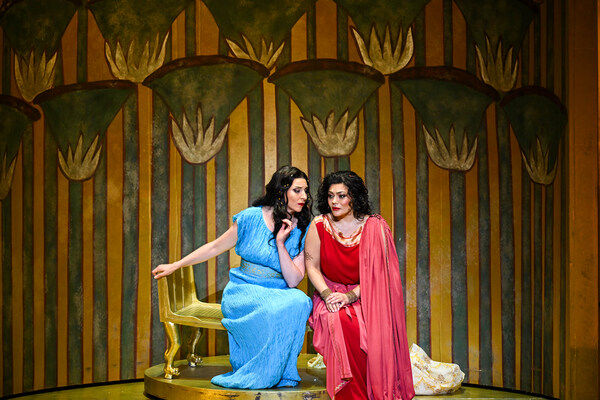


Con esta producción de Aida, la Semperoper apuesta por aquello que ha convertido la obra maestra de Verdi en un clásico imperecedero: emociones intensas, imágenes monumentales y grandes voces. Katharina Thalbach presenta una puesta en escena esencialmente tradicional, sin reinterpretaciones modernas ni lecturas conceptuales excesivas. Escenografías doradas, vestuarios inspirados en el antiguo Egipto y una sucesión de cuadros escénicos de gran impacto visual dominan la representación. La iluminación contribuye decisivamente a crear algunos de los momentos más bellos y conmovedores de la noche.
No todas las decisiones escénicas resultan igualmente acertadas. Las frecuentes intervenciones coreográficas suelen distraer más de lo que aportan, especialmente durante la Marcha Triunfal, donde la danza acentúa la naturaleza repetitiva de la música en lugar de enriquecerla dramáticamente. Sin embargo, la dirección de actores es excelente y mantiene siempre el foco en los conflictos emocionales de los personajes.
Desde el foso, Erik Nielsen adopta una postura claramente favorable a los cantantes. La Staatskapelle Dresden acompaña con gran sensibilidad y flexibilidad, ofreciendo a los solistas amplio espacio para moldear sus frases y desarrollar sus personajes. Esto se percibe especialmente en las grandes escenas de Amneris. En algunos momentos, sin embargo, el discurso musical pierde impulso y se vuelve algo pesado. El coro, por el contrario, se muestra magnífico durante toda la velada, aportando fuerza y cohesión a las escenas multitudinarias.
El reparto reunido para esta función fue auténticamente estelar. La Aida de Aliyn Pérez puede sorprender al principio a quienes esperan una voz más oscura y dramática. Sin embargo, la soprano crece constantemente a lo largo de la representación. En el tercer acto alcanza un nivel extraordinario y se convierte en el verdadero centro emocional de la obra, gracias a una combinación de intensidad expresiva, inteligencia musical y seguridad vocal.
Francesco Meli fue un Radamès ideal. Desde su primera intervención impresionó por la brillantez típicamente italiana de su tenor. La voz corre con facilidad, sostenida por un squillo luminoso que le permite proyectarse por encima de la orquesta sin esfuerzo aparente. Más admirable aún fue su resistencia: mientras muchos intérpretes de este papel muestran signos de cansancio al final de la función, Meli mantuvo intacta su frescura vocal y su presencia escénica.
Eve-Maud Hubeaux ofreció una Amneris de gran categoría. Su mezzosoprano posee nobleza, belleza tímbrica y autoridad dramática, construyendo un personaje tan poderoso como humano. Pocas veces resulta Amneris tan atractiva y convincente.
Soloman Howard destacó como Ramfis gracias a un bajo imponente y una presencia escénica extraordinaria. Alexandros Stavrakakis, en el papel del Rey, aportó un bajo sorprendentemente suave y casi lírico, dotando al personaje de una dignidad poco habitual.
La única decepción notable de la noche fue Oleksandr Pushniak como Amonasro. Su barítono sonó relativamente apagado y careció de la autoridad vocal necesaria para los momentos decisivos del personaje. Resultó una actuación inferior a otras interpretaciones suyas escuchadas anteriormente.
En conjunto, esta Aida fue ante todo una celebración del canto. La producción ofreció imágenes bellas y fieles a la obra, la dirección musical se puso al servicio de los intérpretes y el reparto estuvo a un nivel muy elevado. No todas las ideas escénicas eran imprescindibles y el ritmo musical podría haber tenido mayor impulso, pero cuando Aliyn Pérez, Francesco Meli y Eve-Maud Hubeaux coincidían en escena, la grandeza intemporal de Verdi se hacía plenamente evidente.
Veit Störmer


Comentarios