
Astonishing Fedora in Berlin
On November 27th, the Deutsche Oper Berlin held the premiere of Umberto Giordano's opera Fedora. But it wasn't just a premiere; it was the first time the work had been performed at the German capital. Giordano's piece is a marvel inspired by the work of the celebrated French playwright Victorien Sardou, also the author of La Tosca, both works premiered by Sarah Bernhardt, and in fact, Fedora was dedicated to her. This already indicates the great dramatic depth required for the leading female role. Furthermore, Giordano's opera was premiered by Caruso, another fact that speaks to the strength and complexity demanded by the tenor's role.
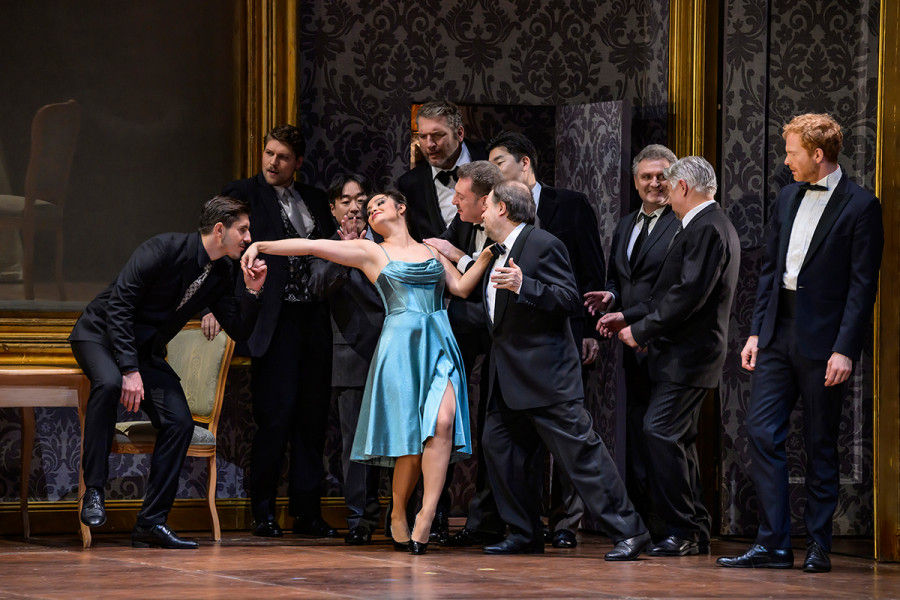
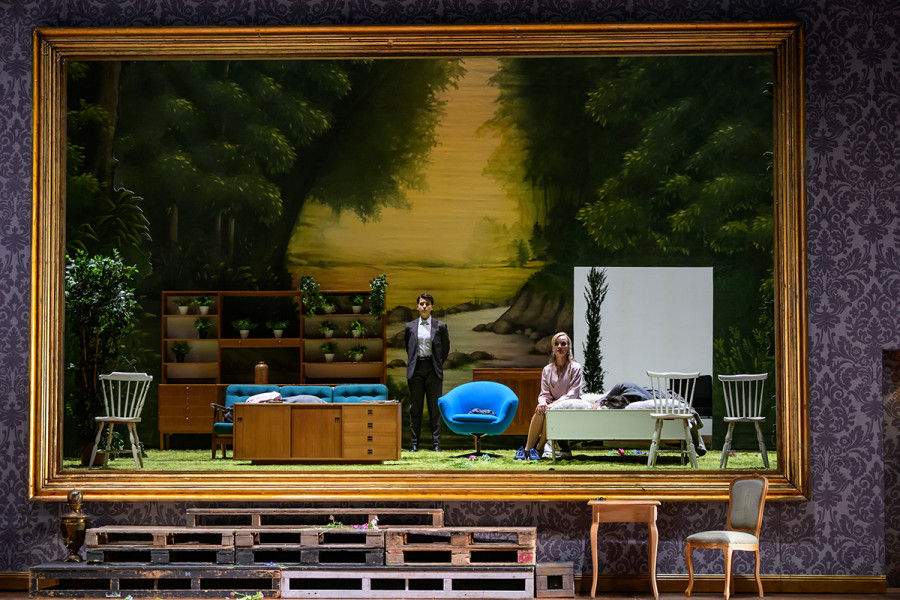
In Berlin, where it was one of the most anticipated premieres of the season, arrived under the direction of Christof Loy. A vibrant, powerful, and captivating staging, classical in style but brought into the modern era through high-quality cinematic video projections. The result was stunning and beautiful, and thanks to the extraordinary musical cast, it has established the Deutsche Oper as a leading opera house throughout Europe.
The two main protagonists of the event were soprano Vida Miknevičiūtė as Fedora and tenor Jonathan Tetelman as Loris Ipanov. Two great figures of opera who, with their respective roles, grew and reached the supernatural. The Lithuanian soprano's Fedora proved to be the best interpretation we have heard from her to date: radiant, poignant, dramatic, and absolutely beautiful. Her high notes and the power of her voice created the best Fedora of all times. Right from the beginning, with "O grandi occhi lucenti," her power was evident; her imposing voice never faltered and offered a breathtaking interpretation of "Dio di giustizia."
Tetelman is one of the most brilliant voices of our time, and if Caruso sang this role before him, he is the new Caruso. Her interpretation was bel-canto elegant, melodic, with sublime phrasing, full of a bright and honeyed color, and a vocal projection few possess. Her "Amor ti vieta" was epic; words cannot describe it. And in the duet with Fedora, "Fedora io t'amo," we wept with emotion.
Julia Muzychenko's epic and delicate voice as Olga Sukarev was extraordinary; she was divine in her interpretation of "Il parigino." Likewise, Navasard Hakobyan, as De Siriex, dazzled with his dark yet honeyed voice, especially in "La donna russa."
Also noteworthy were the voices of Arianna Manganello, Matthew Peña, and Michael Dimovski.
The Deutsche Oper orchestra and its choruses sounded with romantic and heroic energy, while also being rich in detail under the baton of John Fiore, who is establishing himself as a great conductor.
Carola Drillon


El pasado 27 de noviembre la Deutsche Opera de Berlín llevaba a cabo la prémiere de la ópera Fedora de Umberto Giordano. Pero no fue una prémiere cualquiera, fue la primera vez que la obra sonaba en la capital de Alemania. La pieza de Giordano es una maravilla inspirada en la obra del célebre dramaturgo francés Victorien Sardou, autor también de la Tosca, todas obras estrenadas por Sarah Bernhard, y de hecho, Fedora fue dedicada a ella. Esto ya nos indica el gran de dramaturgia necesario para el rol principal femenino. Pero además, la ópera de Giordano fue estrenada por Caruso, otro dato que ya nos indica también la fuerza y complejidad que requiere el papel del tenor.
A Berlín, en el que era uno de los estrenos más esperados de la temporada, llegó de mano del director de escena Christof Loy. Una puesta en escena vibrante, potente y atrayente de corte clásico pero llevada a los tiempos más actuales mediante también proyecciones de vídeo de gran calidad cinematográfica. El resultado fue impactante y bello y pone, gracias al extraordinario cast musical, a la Deutsche Oper como un teatro de referencia en todo Europa.
Los dos grandes protagonistas del evento fueron la soprano Vida Miknevičiūtė como Fedora y el tenor Jonathan Tetelman como Loris Ipanov. Dos grandes figuras de la lírica que con sendos papeles crecieron y llegaron a lo sobrenatural. La Fedora de la soprano lituana resultó ser la mejor interpretación que le conocemos hasta la fecha: radiante, punzante, dramática y absolutamente bella. Sus agudos y la potencia de su voz crearon a la mejor Fedora de todos los tiempos. Ya desde el principio, con O grandi occhi lucenti se manifestó el poder, su voz imponente que no decayó en ningún momento y ofreció una interpretación de Dio di giustizia arrolladora.
Teleman es una de las voces más brillantes del momento y, si este papel lo cantó Caruso antes, él es el nuevo Caruso. Su interpretación fue belcantista, melódica, con un fraseo sublime, llena de un color brillante y meloso, además de una proyección de la voz que pocos tienen. Su Amor ti vieta es épico, no caben palabras para describirlo. Y en el dueto con Fedora, Fedora io t'amo, hemos llorado de emoción.
Extaordinaria la voz épica y delicada de Julia Muzychenko como Olga Sukarev, que fue divina en su interpretación de Il parigino. Asimismo De Siriex, interpretado por Navasard Hakobyan, deslumbró por su voz oscura y, a la vez, melosa, sobre todo en La donna russa.
Cabe destacar también las voces de Arianna Manganello, Matthew Peña y Michael Dimovski.
La orquesta de la Deutsche Oper y sus coros sonaron con una energía romántica y héroica, a la vez que coloristas en los detalles bajo la batuta de John Fiore, quien se consagra como un gran director.
Carola Drillon


Comentarios