
Currentzi's otherworldly new Händel Oratorio
- Dr. Eloi de Tera
- 22 oct 2025
- 4 min de lectura
Georg Friedrich Händel was resurrected today and left Westminster Abbey to hear personally his new Oratorio in Barcelona: Theodor Currentzi's Oratorio. And Händel would have signed it, because Baroque and Händel are also freedom, much to the chagrin of today's Taliban of Baroque. In the history of musical performance, there is a moment that changed everything, with no back way: the birth of Theodor Currentzis and the subsequent creation of his soulmate, MusicAeterna. If we listen to recordings from the early 20th century, we can still hear the emotion and how the music vibrates. With the advent of the CD, not to mention today's Spotify, classical music became an absolutely bland and acetic mathematics, devoid of all emotion and vibration, like a long, white hospital corridor. Live Baroque music was never like that, but those who believed themselves to be Baroque philologists appeared in the 20th century. And finally, musical interpretation based on the most mathematical and sterile elements died with Currentzis's birth, although some in the Baroque genre had already tried it before, such as Pluhar or Alessandrini. But Currentzis reaches another unsurpassed level. Without a doubt, the musicians convey emotion, and the music moves us anew, and they seem to enjoy themselves like little children. Many will criticize Currentzis's interpretation of Handel, but no one can say they didn't enjoy it or weren't moved by it. Handel himself was moved today when he heard his works performed by MusicAeterna. Their sound is neither philological nor empty, but it is truly Baroque and reaches deeply into the soul. The instrumentalists are clearly brilliant and they enjoy themselves, and their faces are always smiling or also crying, seeming to live in a world other than this one. I invite you to seek out high-level Northern European orchestras where the musicians smile. The MusicAeterna choir is tight, has enormous vocal power, and sounds wonderful. Currentzis also relies on promising young singers from Russia, and while not all of them are top-notch, they reach the highest levels and excite like no other. Above all, the extraordinary voice of countertenor Andrey Nemzer and the transparent clarity of soprano Iveta Simonyan stand out. Today, with its entire ensemble of wonderful musicians, Currentzis managed to keep the Palau de la Música Catalana, which was completely packed, able to endure Händel for more than two hours without a break. Two premises that almost never come together: they didn't come for Handel; they came to see the new God of the Musical Universe: Currentzis. A wizard, like Harry Potter, who without a magic wand and with only his hands can make you cry, whether with La Sacre du Printemps, with Das Ring ohne Worten, or with the new Currentzi's Oratorio that we were able to enjoy today. Long live the wizard.
Dr. Eloi de Tera
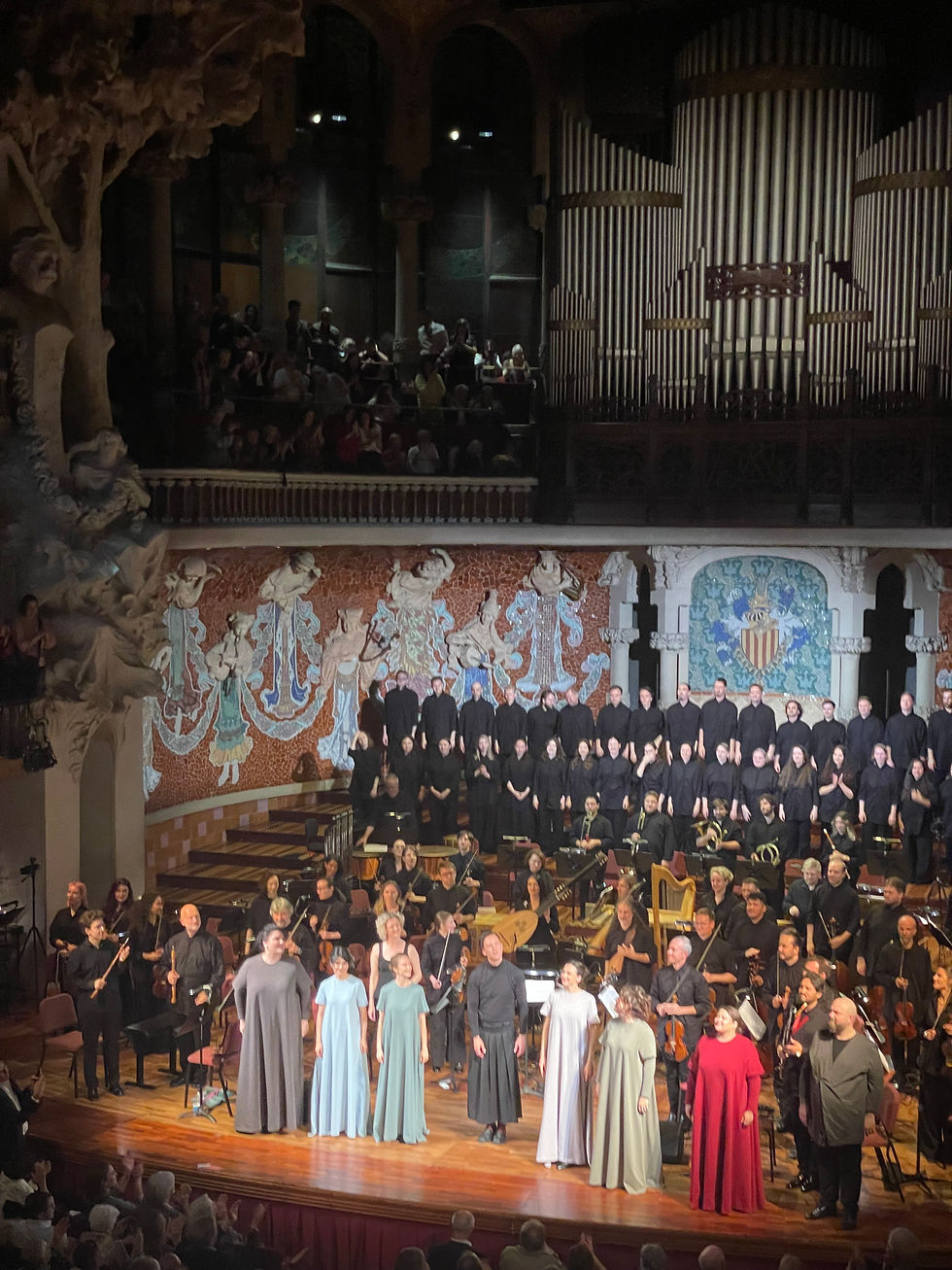
Georg Friedrich Händel resuscitó hoy y dejó la Abadía de Westminster para escuchar en persona en Barcelona su nuevo Oratorio: el Theodor Currentzi's Oratorio. Y es que Händel lo habría firmado, porque el barroco y Händel también son libertad, mal que a los actuales talibanes del barroco les pese. En la historia de la interpretación musical existe un momento que lo cambió todo, sin posible marcha atrás: el nacimiento de Theodor Currentzis y la posterior creación de su alma gemela, MusicAeterna. Si escuhamos grabaciones de principios de siglo XX, podemos aún oír la emoción y como la música vibra. Con la aparición del CD, y ya no digamos del actual Spotify, la música clásica se convirtió en una matemática absolutamente insípida y ascéptica, falta de toda emoción y vibración, como un largo y blanco pasillo de hospital. La música en vivo del Barroco nunca fue así, pero aparecieron el siglo XX los que creyeron ser filólogos del barroco. Y por fin, la interpretación musical basada en lo más matemático y estéril murió con Currentzis, aunque ya algunos en el género barroco lo probaron antes, como Pluhar o Alessandrini. Pero Currentzis llega a otro nivel insuperable. Por fin, los músicos transmiten emociones y la música vuelve a emocionar y puedes observarlos a ellos mismos como disfrutan como niños pequeños. Porque habrán muchos que criticaran como Currentis interpretó a Händel, pero nadie podrá decir que no disfrutó en ello ni se dejó emocionar. Händel mismo hoy se ha emocionado al escuchar sus obras intepretadas por MusicAeterna. Su sonido no es filológico ni vacío pero es verdadero Barroco y llega al fondo del alma. Los instrumentistas son claramente geniales y además disfrutan y sus caras sonríen y parecen vivir en otro mundo que no es este. Les invito a buscar orquestas del Norte de Europa de alto nivel donde los músicos sonrían. El coro de MusicAeterna es compacto, tiene una enorme fuerza vocal y suena de maravilla. Además Currentzis apuesta por los jóvenes cantantes promesa de Rusia y, aunque no todos sean de alto nivel, alcanzan las cotas más altas y emocionan como ninguno. Sobre todo cabe destacar la voz extraordinaria del contratenor Andrey Nemzer y la claridad transparente de la soprano Iveta Simonyan. Currentzis consiguió hoy con todo su conjunto de músicos maravillosos que el Palau de la Música Catalana, lleno al completo, aguantara más de dos horas sin pausa a Händel, dos premisas que casi nunca se juntan y es que no vinieron por Händel, vinieron para ver al nuevo Dios del Universo Musical: Currentzis. Un mago, a lo Harry Potter, que sin varita mágica y con solo sus manos puede hacerte llorar ya sea con Le Sacre du Printemps, con Das Ring ohne Worten o con el nuevo Currentzi's Oratorio que hoy hemos podido disfrutar. Larga vida al mago.
Dr. Eloi de Tera


Comentarios