
Christmas Bohème in Vienna
La Bohème, Giacomo Puccini
Wiener Staatsoper, Wien
25.12.2025
On Christmas Day 2025, the Vienna State Opera chose to present its exquisite La Bohème by Puccini in Franco Zeffirelli's now-legendary staging. A classic La Bohème, full of poetic and inspiring imagery. That captivating and bustling Paris, seemingly lifted from Hugo's Les Misérables, or the visual power of the snow-covered Barrière d'Enfer behind a tulle curtain like the one Zeffirelli himself used in the final scene of Visconti's Morte a Venezia, are examples that make up this a total work of art. In today's Viennese production, there was too much darkness in some sequences of the operatic narrative, and the lighting was not its strong point; it certainly wasn't the exact same as Zeffirelli's original.
The cast was headed by Juan Diego Flórez in the role of Rodolfo. Flórez is a living legend; his unmistakably elegant and luminous, cinnamon-hued timbre is still capable of moving audiences and interpreting any role with absolute perfection. His voice no longer possesses the same power and has become more cavernous, so much so that in some passages of "Che gelida manina" the orchestra drowned out his voice, but very few tenors can say they have reached where he still does with the pristine perfection and the musicality he demonstrated tonight. His high C in the same "Che gelida manina" was overflowing and full, brimming with a powerful beauty so unique that almost no tenor can imitate it.
Nicole Car was, without a doubt, the great diva of the evening. Her Mimì, with her hazelnut timbre, warm yet crystalline in the high notes, is superlative. Her interpretation is patient and virtuosic, overflowing with technique and impressive phrasing. Her "Mi chiamano Mimì" shuns the superfluous and vulgar to enter the divine, offering a truly delightful performance. Likewise, in "Che lieta uscì" she was stellar, and the entire third act, her duets with Flórez, exploded with breathtaking beauty. A Mimì that will not be forgotten for a long time.
Andrey Zhilikhovsky sang a Marcello that was both exciting and robust like no other; his timbre is captivating, and his vocal power is enormous. Ivo Stanchev, alongside him, also proved to be a marvelous Colline, endowed with monumental projection. Jusung Gabriel Park sang a brave Schaunard with an alluring sound.
Anna Bondarenko is an exuberant and courageous Musetta; her high notes managed to contend with a very deafening orchestra and shine above that instrumental force in the second act. She was an excellent Musetta.
Giacomo Sagripanti is a very young conductor who knows how to rise above any large orchestra, and today he conducted this Bohème with tenacity, energy, and passion. And the Vienna State Opera orchestra sounds fabulous, like no other, but today Sagripanti couldn't quite find the right balance to allow the voices to shine alongside the orchestra rather than compete with it. Despite this, his Bohème was thrilling until the final orchestral explosion, which brought us to tears. The theater chorus was consistently balanced and cohesive, and their singing was of excellent quality in timbre.
Dr. Eloi de Tera

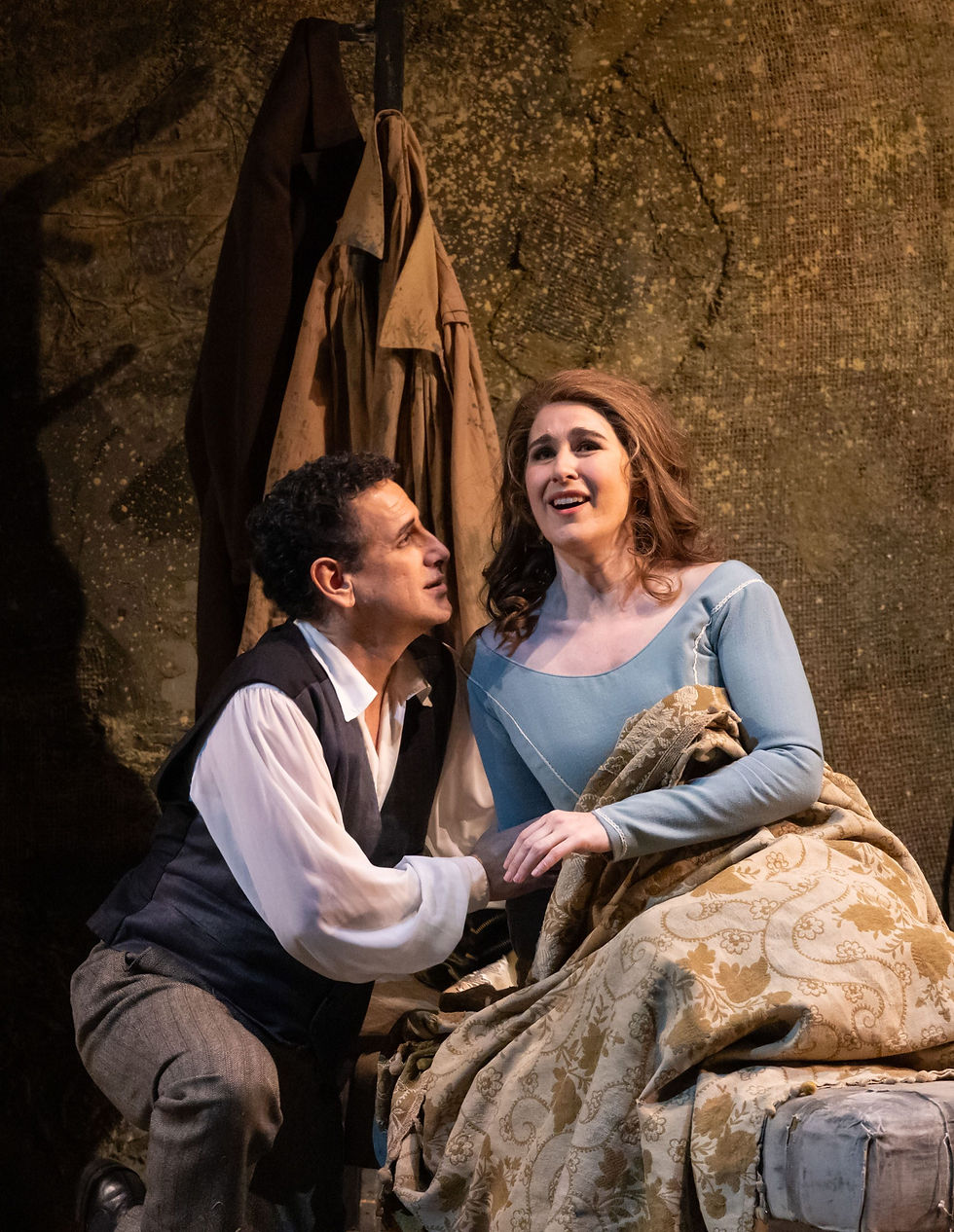


El día de Navidad de este 2025, la Wiener Staatsoper ha decidido apostar por su preciosa Bohème de Puccini en la puesta en escena ya mítica de Franco Zeffirelli. Una Bohème clásica, de imágenes poéticas e inspiradoras. Ese París cautivador y bullicioso que parece salido de Les Misérables de Hugo o la fuerza visual de La Barrière d'Enfer nevada detrás de un tul como el que el mismo Zeffirelli puso en la escena final de Morte a Venezia de Visconti, son ejemplos que conforman esta obra de arte total. En la producción vienesa reinaba hoy demasiada oscuridad en algunas secuencias del relato operístico y la iluminación no fue el punto fuerte y seguro que no es la misma exacta de Zeffirelli.
El reparto lo encabezaba un Juan Diego Flórez en la piel de Rodolfo. Flórez es un mito en vida, su timbre de inconfundible elegancia y luminosidad acanelada es aún capaz de emocionar y interpretar cualquier papel con absoluta perfección. Su voz ya no posee la misma potencia y se ha vuelto más cavernosa, con lo que en algún pasaje de Che gelida manina la orquesta tapaba su voz, pero muy pocos tenores pueden decir que han llegado a dónde él aún lo hace con la perfección impoluta y la musicalidad que hoy demostró. Su Do de pecho en el mismo Che gelida manina fue rebosante y pleno y lleno de una fuerte belleza tan única que casi ningún tenor puede imitarlo.
Nicole Car era, sin lugar a dudas, la gran diva de la noche. Su Mimì de timbre avellanado, cálida y a la vez cristalina en los agudos, es superlativa. Su interpretación es paciente y virtuosa, rebosando técnica y un fraseo impresionante. Su Mi chiamano Mimì rehuye lo superfluo y vulgar para entrar en lo divino, regalando una delicia de interpretación. Asimismo, en Che lieta uscì resultó estelar y todo el tercer acto junto a Flórez en los dúos explotaron con una belleza arebatadora. Una Mimì que tardará tiempo en olvidarse.
Andrey Zhilikhovsky cantó un Marcello emocionante y robusto como ninguno, su timbre enamora y su fuerza vocal es enorme. Ivo Stanchev, a su lado, también resultó ser un Colline maravilloso dotado de una proyección monumental. Jusung Gabriel Park cantó un Schaunard valiente y de sonoridad atrayente.
Anna Bondarenko es una Musetta exuberante y valiente, sus agudos supieron forcejear con una orquesta muy ensordecedora y brillar por encima de esa fuerza instrumental en el segundo acto. Fue una Musetta muy excelente.
Giacomo Sagripanti es un jovencísimo director que sabe anteponerse a cualquier gran orquesta y hoy dirigió esta Bohème con tesón, energía y pasión. Y la orquesta de la Wiener Staatsoper suena fabulosamente, como ninguna otra, pero hoy Sagripanti no supo encontrar el equilibrio justo para que las voces brillen junto a la orquesta y no luchen contra ella. A pesar de ello, su Bohème ha sido emocionante hasta el estallido final orquestal en el cual ya directamente hemos llorado de emoción. El coro del teatro estuvo en todo momento equilibrado y compacto y su canto fue de gran calidad en el timbre.
Dr. Eloi de Tera


Comentarios