
Fledermaus, Kopfsprung und ein Holländer zum Dahinschmelzen
Der fliegende Holländer, Richard Wagner
Tiroler Festspiele Erl, 17.07.2026
Musikalische Leitung: Asher Fisch, Inszenierung: Josef E. Köpplinger Der Holländer: Christopher Maltman, Senta: Nina Bezu, Daland: Gábor Bretz, Erik: Jamez McCorkle, Mary: Shannon Keegan, Steuermann: Matthew Newlin
Richard Wagner gehört seit vielen Jahren zum Markenzeichen der Tiroler Festspiele Erl. Unter Jonas Kaufmann soll dieser Schwerpunkt nun noch weiter ausgebaut werden. Mit Der fliegende Holländer stand nun eine Neuinszenierung auf dem Spielplan, die vor allem wegen Christopher Maltman mit großen Erwartungen verbunden war. Tatsächlich wurde es szenisch ein durchaus gelungener Abend. Musikalisch blieb dagegen vieles hinter den Möglichkeiten zurück.
Gute Ideen, aber nicht bis zum Ende gedacht
Josef E. Köpplingers Inszenierung beginnt mit einer wirklich starken Idee. Der erste Akt ist szenisch der Höhepunkt des Abends. Ein gewaltiger Schiffsmast senkt sich mitten über das Orchester und lässt dieses selbst Teil von Dalands Schiff werden. Zusammen mit den gelungenen Lichtprojektionen entsteht sofort eine dichte Atmosphäre. Überhaupt wird die Bühne des Passionsspielhauses hervorragend genutzt. Mit vergleichsweise einfachen Mitteln entsteht eine abwechslungsreiche Szenerie, die nie statisch wirkt. Auch die Personenführung überzeugt über weite Strecken und erzählt die Beziehungen der Figuren nachvollziehbar.
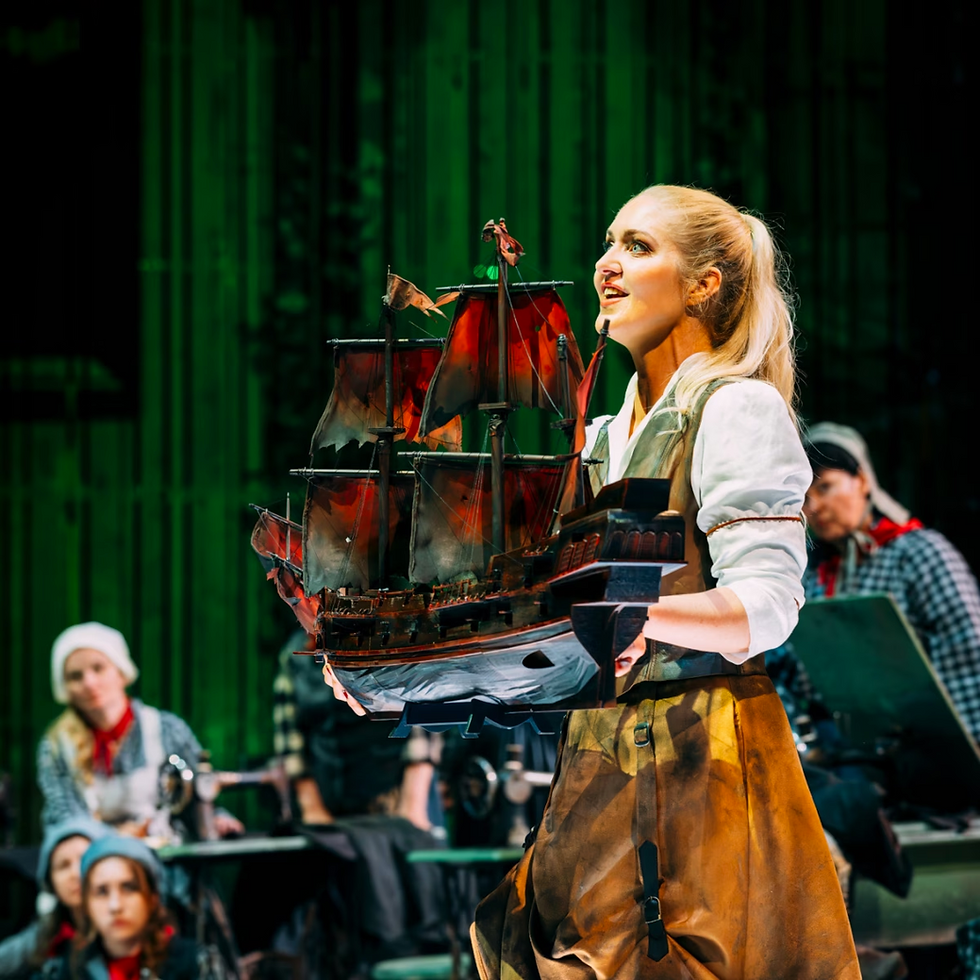
Besonders neugierig macht zunächst Senta. Während des gesamten ersten Aktes sitzt sie mit einem Modell des Geisterschiffes und einer Filmkamera auf der Vorbühne, fast so, als würde sich das Geschehen vor ihren Augen wie ein Film entfalten oder ihrer eigenen Fantasie entspringen. Das ist ein spannender Ansatz, der jedoch nach dem ersten Akt praktisch verschwindet. Schade, denn genau daraus hätte sich ein überzeugender roter Faden entwickeln können.
So bleibt insgesamt der Eindruck einer Inszenierung mit vielen guten Einfällen, die aber nicht konsequent weitergedacht werden. Dennoch holt Köpplinger das Maximum aus der Bühne heraus und beweist ein gutes Gespür für wirkungsvolle Bilder.
Für einen ungeplanten, aber durchaus charmanten Moment sorgten ausgerechnet die Fledermäuse, die sich inzwischen im Passionsspielhaus eingenistet haben. Immer wieder flogen sie durch den Zuschauerraum und über die Bühne. Gerade bei einer Geisteroper wie dem Fliegenden Holländer wirkte das fast wie ein zusätzlicher Regieeinfall und sorgte für manches Schmunzeln im Publikum.
Weniger überzeugend geriet dagegen die Figur der Mary. Sie stolziert während des gesamten Abends wie ein bockiges Mädchen über die Bühne und bleibt damit die einzige Figur, deren szenische Zeichnung sich kaum erschließt.
Eindrucksvoll gelingt schließlich auch das Ende. Während Wagner seine Erlösung musikalisch vollendet, nimmt Senta auf der Hinterbühne Anlauf und springt scheinbar in den projizierten Ozean. Dieser Kopfsprung gehört zu den stärksten Bildern des Abends und bildet einen stimmungsvollen Abschluss einer Inszenierung, die immer dann überzeugt, wenn sie ihren Bildern vertraut.
Ein Dirigat ohne Richtung
So überzeugend viele szenische Momente ausfielen, so enttäuschend verlief der musikalische Teil des Abends. Ein derart inspirationsloses Dirigat erlebt man im Holländer nur selten. Asher Fisch ließ kaum erkennen, welche Geschichte er mit Wagners Partitur erzählen wollte. Große Spannungsbögen entstanden praktisch nie. Die Musik floss nicht, sondern reihte sich Episode an Episode, ohne ein wirkliches Ziel zu entwickeln.
Besonders auffällig war das fehlende Atmen. Die Sänger erhielten kaum Raum, ihre Phrasen organisch zu entfalten, stattdessen wirkte vieles eng und mechanisch. Selbst dort, wo Wagner von einem großen musikalischen Atem lebt, blieb das Dirigat erstaunlich unbeweglich. Es war dabei nicht einmal konsequent straff oder bewusst durchdirigiert. Vielmehr fehlte schlicht eine erkennbare musikalische Idee.
Umso bedauerlicher ist dies, weil das Orchester der Tiroler Festspiele hörbar über deutlich größeres Potenzial verfügt. Immer wieder blitzten schöne Farben auf, besonders im Holz, auch die Streicher ließen ihre Qualität erkennen. Unter einer inspirierteren musikalischen Leitung könnte dieser Klangkörper erheblich mehr leisten. An diesem Abend blieb er weit unter seinen Möglichkeiten.
Gerade weil Asher Fisch als Chefdirigent und prägende musikalische Figur der Festspiele Verantwortung trägt, fällt diese Enttäuschung besonders ins Gewicht. Von einer solchen Position darf man eine klare künstlerische Handschrift erwarten. Davon war an diesem Abend kaum etwas zu hören.
Ein Holländer zum Dahinschmelzen
Der unbestrittene Mittelpunkt des Abends war Christopher Maltman. Um ihn drehte sich die gesamte Produktion, und er wurde den hohen Erwartungen mehr als gerecht, wenn er sie nicht sogar übertraf. Sein edler Bassbariton verbindet enorme Kraft mit außergewöhnlicher Eleganz. Vor allem aber gestaltet er die Rolle mit großer Intelligenz. Jede Phrase besitzt ein Ziel, jedes Wort ist mühelos zu verstehen. Sein Holländer lebt nicht nur von stimmlicher Autorität, sondern von einer tief empfundenen inneren Zerrissenheit. Maltman muss dafür nichts demonstrieren, er ist diese Figur einfach. Das gehört zu den eindrucksvollsten Rollengestaltungen, die man derzeit erleben kann. Gemeinsam mit Nicholas Brownlee dürfte er das Wagnerfach in den kommenden Jahren entscheidend mitprägen. Sein Holländer ist schlicht zum Dahinschmelzen.
Nina Bezu präsentierte eine technisch sehr sichere Senta. Sie blieb stets musikalisch, forcierte nie und bewahrte auch in den großen Ausbrüchen die Kontrolle über ihre Stimme. Allerdings fehlt ihrem Sopran eine wirklich unverwechselbare Klangfarbe. Die Stimme trägt gut und setzt sich problemlos durch, bleibt aber klanglich eher nüchtern. Ihre schönsten
Momente hatte sie im großen Duett mit Maltman. Dort gewann ihre Stimme deutlich an Wärme und Leuchtkraft.
Gábor Bretz sang den Daland ordentlich, ohne nachhaltig Eindruck zu hinterlassen. Die Textverständlichkeit ließ häufig zu wünschen übrig, gesanglich erfüllte er die Partie solide. Gegen die enorme Präsenz Maltmans wirkte er allerdings deutlich kleiner. Hinzu kommt, dass auch Bretz eher Bassbariton als echter Bass ist. Gerade hier hätte eine differenziertere Besetzung dem Klangbild gutgetan.
Jamez McCorkle bestätigte leider erneut den Eindruck, dass Wagner nicht sein Repertoire ist. Seine Stimme wirkt durch die starke Deckung künstlich eingeengt und verliert dadurch an Freiheit. Hinzu kommen deutliche Probleme mit der deutschen Sprache. Vieles bleibt unverständlich, auch die Intonation gerät immer wieder ins Schwanken. Hier wäre eine intensivere Arbeit mit einem Korrepetitor dringend wünschenswert. Erst gegen Ende gelangen ihm einige schöne Spitzentöne, die erkennen ließen, welches Potenzial grundsätzlich vorhanden ist. Insgesamt konnte seine Darstellung jedoch nicht überzeugen.
Shannon Keegan blieb als Mary ebenfalls hinter den Erwartungen zurück. Schon szenisch konnte die Figur wenig überzeugen, gesanglich setzte sich dieser Eindruck fort. Ihrem Mezzo fehlten Fundament, Präsenz und Eigenfarbe. Auch die Gestaltung blieb blass, sodass Mary an diesem Abend kaum Akzente setzen konnte.
Eine positive Überraschung war dagegen Matthew Newlin. Seine Stimme hat sich in den vergangenen Jahren hörbar entwickelt. Sein heller Tenor besitzt inzwischen viel Substanz und zugleich eine angenehme Leichtigkeit. Für den kleinen Steuermann war er fast schon überqualifiziert. Man konnte sich des Eindrucks kaum erwehren, dass er als Erik die überzeugendere Wahl gewesen wäre. Seine wenigen Auftritte gehörten jedenfalls zu den erfreulichsten Momenten des Abends.
Ein Chor unter seinen Möglichkeiten
Auch der Chor der Tiroler Festspiele hinterließ keinen guten Eindruck. Vor allem der Männerchor wirkte häufig unausgeglichen. Der Versuch, einzelne Stimmen klanglich voneinander abzusetzen, führte eher zu einem unruhigen Gesamtbild, als dass ein homogener Chorklang entstand. Geschlossenheit und Präzision blieben vielfach auf der Strecke. Für ein Festival dieses Anspruchs war das deutlich zu wenig.
Der Frauenchor schnitt nur wenig besser ab. Streckenweise klang das Ensemble eher nach einem ambitionierten Amateurchor als nach einem professionellen Festivalchor. Erst in den Spitzentönen gelang immer wieder ein geschlossener und tragfähiger Klang.
Fazit
Dieser Fliegende Holländer hinterlässt gemischte Gefühle. Szenisch überzeugt die Produktion mit starken Bildern, einer durchdachten Personenführung und einer hervorragenden Nutzung der Bühne. Einige der interessantesten Ideen, insbesondere Sentas Beobachterrolle im ersten Akt, hätten allerdings konsequenter weiterentwickelt werden müssen.
Musikalisch bleibt der Abend dagegen weit hinter den Erwartungen zurück. Das ideenlose Dirigat verhindert, dass sich das hörbar vorhandene Potenzial des Orchesters entfalten kann. Auch Chor und Teile des Ensembles erreichen nicht das Niveau, das man von den Tiroler Festspielen erwarten darf.
Dass man den Abend dennoch nicht so schnell vergisst, liegt an Christopher Maltman. Sein Holländer vereint alles, was diese Partie braucht: eine Stimme von außergewöhnlicher Noblesse, eine vorbildliche Textverständlichkeit und eine Darstellung, die nie aufgesetzt wirkt. Allein für ihn lohnt sich die Reise nach Erl. Er macht aus einem musikalisch insgesamt enttäuschenden Abend eine Aufführung, die trotz aller Schwächen lange in Erinnerung bleibt.
Veit Störmer


Bat, Swan Dive, and a Dutchman to Melt Your Heart
Richard Wagner has long been one of the defining pillars of the Tiroler Festspiele Erl. Under Jonas Kaufmann, this focus is set to become even more prominent. A new production of The Flying Dutchman has now joined the festival's repertoire, attracting considerable anticipation above all because of Christopher Maltman. In the end, it proved to be a scenically compelling evening. Musically, however, much remained below its potential.
Strong Ideas That Never Fully Come Together
Josef E. Köpplinger's production opens with a genuinely striking concept. The first act is unquestionably the scenic highlight of the evening. A massive ship's mast descends directly above the orchestra, transforming it into an integral part of Daland's vessel. Combined with effective lighting projections, it immediately creates an atmosphere dense with tension. More generally, the stage of the Passion Play House is used to excellent effect. With comparatively simple means, Köpplinger creates a visually varied world that never feels static. His direction of the performers is convincing throughout much of the evening, allowing the relationships between the characters to unfold naturally and coherently.
Senta is particularly intriguing at first. Throughout the entire first act, she sits at the front of the stage with a model of the ghost ship and a film camera, almost as though the events were unfolding before her like a movie—or emerging from her own imagination. It is a fascinating idea that unfortunately disappears almost entirely after the first act. That is a pity, because it could have developed into a compelling dramatic thread.
The overall impression is therefore that of a production full of excellent ideas that are never consistently pursued. Even so, Köpplinger extracts the maximum from the stage and demonstrates a keen instinct for memorable theatrical imagery.
An unexpected yet thoroughly charming addition came from the bats that have apparently taken up residence in the Passion Play House. They repeatedly flew across the stage and through the auditorium. In a ghostly opera like The Flying Dutchman, they almost felt like an additional directorial touch, prompting more than a few amused smiles from the audience.
Less convincing was the characterization of Mary. Throughout the evening she struts about the stage like a sulky little girl, making her the only character whose dramatic portrayal remains difficult to understand.
The ending, on the other hand, is highly effective. As Wagner brings his vision of redemption to its musical conclusion, Senta runs across the rear stage and appears to dive headfirst into the projected ocean. This swan dive is among the evening's most powerful images and provides a haunting conclusion to a production that is always at its strongest whenever it trusts the expressive power of its visual language.
A Performance from the Pit Without Direction
As convincing as many of the staging's visual moments were, the musical side of the evening proved deeply disappointing. One rarely encounters such an uninspired reading of The Flying Dutchman. Asher Fisch gave little indication of what story he wished to tell through Wagner's score. Long-range musical architecture was almost entirely absent. Rather than unfolding organically, the music seemed to progress from one episode to the next without any real sense of destination.
Most striking was the absence of musical breathing space. The singers were given little opportunity to shape their phrases naturally, and much of the performance felt constrained and mechanical. Even in passages where Wagner's music depends on expansive phrasing, the conducting remained surprisingly inflexible. Nor was it consistently taut or deliberately driven forward. Instead, it simply lacked any discernible musical concept.
This is particularly regrettable because the Tiroler Festspiele orchestra clearly possesses considerably greater potential. Beautiful instrumental colours repeatedly emerged, especially from the woodwinds, while the strings also demonstrated their quality. Under more inspired musical leadership, this orchestra could achieve far more. On this occasion, however, it performed well below its capabilities.
Since Asher Fisch serves as both chief conductor and one of the festival's defining musical personalities, this disappointment carries particular weight. Someone in such a position should be expected to bring a distinctive artistic vision. Very little of that was evident this evening.
A Dutchman to Melt Your Heart
The undisputed centre of the performance was Christopher Maltman. The entire production revolved around him, and he not only fulfilled the enormous expectations placed upon him but arguably surpassed them.
His noble bass-baritone combines tremendous power with exceptional refinement. More importantly, he shapes the role with remarkable intelligence. Every phrase has direction, every word is effortlessly comprehensible. His Dutchman is defined not only by vocal authority but by profound inner conflict. Maltman never needs to demonstrate this; he simply is the character. It is one of the most compelling Wagner portrayals currently to be experienced on any stage. Together with Nicholas Brownlee, he is likely to become one of the defining Wagner singers of the coming years. His Dutchman is simply irresistible.
Nina Bezu offered a technically assured Senta. She remained consistently musical, never forcing the voice, while maintaining complete control even during the role's great dramatic outbursts. What her soprano lacks, however, is a truly distinctive tonal colour. The voice projects well and easily carries through the orchestra, yet its timbre remains somewhat neutral. Her finest moments came during the great duet with Maltman, where her singing acquired noticeably greater warmth and radiance.
Gábor Bretz delivered a solid Daland without leaving a lasting impression. His diction was frequently indistinct, although vocally he handled the role competently. Beside Maltman's overwhelming stage presence, however, he inevitably seemed overshadowed. In addition, Bretz is more of a bass-baritone than a true bass. A more differentiated casting choice would have benefited the overall vocal balance of the performance.
Jamez McCorkle unfortunately confirmed once again the impression that Wagner is not his natural repertoire. His voice sounds artificially constricted because of excessive vocal cover, depriving it of freedom and openness. Added to this were noticeable difficulties with the German language. Much of the text remained unintelligible, and his intonation repeatedly wavered. More intensive work with a language coach would seem highly advisable. Only towards the end did he produce a few attractive high notes that hinted at the potential his voice undoubtedly possesses. Overall, however, his performance failed to convince.
Shannon Keegan likewise fell short of expectations as Mary. Since the character had already been unconvincingly drawn on stage, the vocal performance only reinforced that impression. Her mezzo-soprano lacked foundation, presence and a distinctive tonal profile. Dramatically, too, the portrayal remained pale, leaving Mary with little impact throughout the evening.
A pleasant surprise, by contrast, was Matthew Newlin. His voice has developed noticeably in recent years. His bright tenor now possesses considerable substance while retaining an appealing sense of ease. For the relatively small role of the Steersman, he was almost overqualified. One could hardly avoid the impression that he would have been the more convincing choice for Erik. In any case, his brief appearances ranked among the evening's highlights.
A Chorus Below Expectations
The chorus of the Tiroler Festspiele also failed to make a convincing impression. The men's chorus in particular frequently sounded uneven. Attempts to differentiate individual vocal lines resulted less in clarity than in an unsettled overall sound. Cohesion and precision were too often lacking. For a festival of this calibre, the result was clearly insufficient.
The women's chorus fared only slightly better. At times the ensemble sounded more like an ambitious amateur chorus than a professional festival choir. Only in the upper register did the singers repeatedly achieve a unified, resonant sound.
Conclusion
This production of The Flying Dutchman leaves mixed impressions. As a piece of theatre, it succeeds through striking visual imagery, thoughtful direction of the performers, and an excellent use of the stage. Some of its most intriguing ideas—particularly Senta's role as observer during the first act—would, however, have benefited from more consistent development.
Musically, the evening fell well short of expectations. The uninspired conducting prevented the orchestra's evident potential from fully unfolding. The chorus and several members of the cast likewise failed to reach the standard one expects from the Tiroler Festspiele Erl.
If the performance nevertheless lingers in the memory, it is above all because of Christopher Maltman. His Dutchman embodies everything the role demands: a voice of exceptional nobility, exemplary diction, and a portrayal that never feels contrived. He alone makes the journey to Erl worthwhile. Thanks to him, an evening that is otherwise musically disappointing becomes a performance that, despite all its shortcomings, will be remembered for a long time.
Veit Störmer


Murciélagos, un salto de cabeza y un Holandés para derretirse
Richard Wagner forma desde hace muchos años parte de la identidad artística del Festival Tiroler Festspiele de Erl. Bajo la dirección de Jonas Kaufmann, este eje del festival está llamado a reforzarse aún más. Con una nueva producción de El holandés errante en cartel, la expectación era grande, sobre todo por la participación de Christopher Maltman. El resultado fue una velada escénicamente muy lograda. Musicalmente, en cambio, gran parte de la función quedó por debajo de sus posibilidades.
Buenas ideas, pero no desarrolladas hasta el final
La puesta en escena de Josef E. Köpplinger comienza con una idea realmente brillante. El primer acto constituye el punto culminante de toda la producción. Un enorme mástil de barco desciende sobre la orquesta, convirtiéndola en parte del barco de Daland. Junto con las acertadas proyecciones lumínicas, crea de inmediato una atmósfera densa y sugestiva. En general, el escenario del Passion Play House se aprovecha de forma excelente. Con recursos relativamente sencillos, Köpplinger consigue una escenografía variada que nunca resulta estática. También la dirección de actores convence durante buena parte de la representación y permite comprender con claridad las relaciones entre los personajes.
Especialmente sugerente resulta, en un principio, la figura de Senta. Durante todo el primer acto permanece sentada en el proscenio con una maqueta del barco fantasma y una cámara de cine, como si la acción se desarrollara ante sus ojos como una película o incluso surgiera de su propia imaginación. Es una idea fascinante que, lamentablemente, desaparece casi por completo después del primer acto. Es una lástima, porque precisamente de ahí podría haberse desarrollado un sólido hilo conductor.
La impresión general es, por tanto, la de una producción llena de buenas ideas que nunca llegan a desarrollarse con verdadera coherencia. Aun así, Köpplinger extrae el máximo partido del escenario y demuestra un notable talento para crear imágenes teatrales de gran impacto.
Uno de los momentos más inesperados y encantadores de la noche lo protagonizaron precisamente los murciélagos que, al parecer, se han instalado en el Passion Play House. Una y otra vez sobrevolaron tanto el escenario como la sala. En una ópera de fantasmas como El holandés errante, parecían casi un recurso escénico adicional, provocando más de una sonrisa entre el público.
Mucho menos convincente resultó, en cambio, la caracterización de Mary. Durante toda la representación deambula por el escenario como una niña pequeña malhumorada, convirtiéndose en el único personaje cuya construcción dramática apenas resulta comprensible.
El desenlace, por el contrario, está magníficamente resuelto. Mientras Wagner culmina musicalmente la redención, Senta toma impulso al fondo del escenario y parece lanzarse de cabeza al océano proyectado. Ese salto constituye una de las imágenes más poderosas de toda la producción y pone el broche final a una puesta en escena que alcanza sus mejores momentos cuando confía plenamente en la fuerza de sus imágenes.
Una dirección musical sin rumbo
Si la propuesta escénica dejó numerosos momentos memorables, el apartado musical resultó claramente decepcionante. Rara vez se escucha una lectura tan falta de inspiración de El holandés errante. Asher Fisch apenas dejó entrever qué historia quería contar a través de la partitura de Wagner. Los grandes arcos de tensión prácticamente nunca llegaron a construirse. La música no fluía de manera orgánica, sino que avanzaba de un episodio a otro sin una dirección clara.
Lo más llamativo fue la falta de respiración musical. Los cantantes apenas dispusieron del espacio necesario para desarrollar sus frases con naturalidad y gran parte de la interpretación sonó rígida y mecánica. Incluso allí donde Wagner exige un amplio aliento musical, la dirección permaneció sorprendentemente inflexible. Tampoco se trató de una lectura deliberadamente tensa o de un planteamiento especialmente firme; simplemente faltaba una idea musical reconocible.
Resulta aún más lamentable porque la orquesta del Tiroler Festspiele demuestra poseer un potencial muy superior. En repetidas ocasiones afloraron hermosos colores instrumentales, especialmente en las maderas, mientras que la cuerda también dejó entrever su calidad. Bajo una dirección más inspirada, este conjunto podría ofrecer mucho más. En esta ocasión, sin embargo, actuó claramente por debajo de sus posibilidades.
Precisamente porque Asher Fisch es el director musical titular y una de las principales figuras artísticas del festival, esta decepción adquiere un peso especial. De alguien en esa posición cabe esperar una personalidad musical claramente definida. En esta velada apenas hubo rastro de ella.
Un Holandés para derretirse
El centro indiscutible de la representación fue Christopher Maltman. Toda la producción giró en torno a él, y no solo estuvo a la altura de las enormes expectativas, sino que incluso llegó a superarlas.
Su noble voz de bajo-barítono combina una enorme potencia con una elegancia extraordinaria. Pero, sobre todo, construye el personaje con una inteligencia excepcional. Cada frase tiene una dirección precisa y cada palabra se entiende con absoluta claridad. Su Holandés no vive únicamente de la autoridad vocal, sino también de una profunda conflictividad interior. Maltman no necesita demostrar nada: simplemente es el personaje. Se trata de una de las interpretaciones wagnerianas más impresionantes que pueden verse hoy sobre un escenario. Junto con Nicholas Brownlee, está llamado a convertirse en una de las grandes referencias del repertorio wagneriano en los próximos años. Su Holandés es, sencillamente, irresistible.
Nina Bezu presentó una Senta de gran seguridad técnica. Cantó siempre con musicalidad, sin forzar nunca la voz y manteniendo el control incluso en los grandes estallidos dramáticos del papel. Sin embargo, a su soprano le falta una personalidad tímbrica verdaderamente inconfundible. La voz proyecta bien y se impone sin dificultad sobre la orquesta, pero su color resulta más bien neutro. Sus mejores momentos llegaron en el gran dúo con Maltman, donde su canto ganó claramente en calidez y luminosidad.
Gábor Bretz interpretó un Daland correcto, aunque sin dejar una impresión duradera. La dicción fue con frecuencia poco clara, mientras que vocalmente resolvió la parte con solvencia. Frente a la enorme presencia escénica de Maltman, sin embargo, quedó inevitablemente eclipsado. Además, Bretz es más un bajo-barítono que un bajo auténtico. En este papel, una elección de reparto más diferenciada habría beneficiado el equilibrio sonoro de la producción.
Jamez McCorkle confirmó, por desgracia, la impresión de que Wagner no pertenece a su repertorio natural. Su voz suena artificialmente constreñida debido a un exceso de cobertura, lo que le resta libertad y espontaneidad. A ello se suman evidentes dificultades con la pronunciación del alemán. Gran parte del texto resulta ininteligible y la afinación vacila repetidamente. Sería muy recomendable un trabajo más intenso con un preparador lingüístico. Solo hacia el final consiguió algunos agudos atractivos que dejaron entrever el potencial de su instrumento. En conjunto, sin embargo, su interpretación no logró convencer.
Shannon Keegan tampoco estuvo a la altura de las expectativas como Mary. Después de una caracterización escénica poco convincente, el aspecto vocal no hizo sino reforzar esa impresión. A su mezzosoprano le faltaron cuerpo, presencia y un color propio. También desde el punto de vista interpretativo el personaje permaneció desdibujado, sin llegar a dejar huella.
La sorpresa positiva de la velada fue Matthew Newlin. Su voz ha evolucionado de forma evidente en los últimos años. Su tenor claro posee ahora una apreciable consistencia sin perder ligereza. Para el pequeño papel del Timonel estaba casi sobrecualificado. Era difícil evitar la impresión de que habría sido una opción más convincente para interpretar a Erik. En cualquier caso, sus breves intervenciones figuraron entre los momentos más gratificantes de la noche.
Un coro por debajo de sus posibilidades
El coro del Tiroler Festspiele tampoco dejó una impresión favorable. Especialmente el coro masculino sonó con frecuencia desigual. El intento de destacar determinadas voces individuales produjo un conjunto más inquieto que realmente diferenciado. La homogeneidad y la precisión brillaron por su ausencia en demasiados momentos. Para un festival de este nivel, el resultado fue claramente insuficiente.
El coro femenino obtuvo un resultado solo ligeramente mejor. En algunos pasajes, el conjunto sonó más como un coro amateur de gran nivel que como un coro profesional de festival. Solo en el registro agudo consiguió repetidamente un sonido compacto y bien sostenido.
Conclusión
Este Holandés errante deja sensaciones encontradas. Escénicamente, la producción convence gracias a sus poderosas imágenes, a una dirección de actores cuidadosamente trabajada y a un excelente aprovechamiento del espacio escénico. Algunas de sus ideas más interesantes, especialmente el papel de Senta como observadora durante el primer acto, habrían merecido un desarrollo mucho más consecuente.
Musicalmente, en cambio, la velada quedó muy por debajo de las expectativas. Una dirección orquestal falta de imaginación impidió que aflorara el evidente potencial de la orquesta. El coro y varios miembros del reparto tampoco alcanzaron el nivel que cabe esperar del Tiroler Festspiele de Erl.
Si, pese a todo, la representación permanece en la memoria, es sobre todo gracias a Christopher Maltman. Su Holandés reúne todo lo que exige este papel: una voz de extraordinaria nobleza, una dicción ejemplar y una interpretación que nunca resulta artificiosa. Solo por él merece la pena viajar a Erl. Gracias a su actuación, una velada musicalmente decepcionante termina convirtiéndose en una función que, pese a todas sus debilidades, permanecerá durante mucho tiempo en el recuerdo.
Veit Störmer


Comentarios